
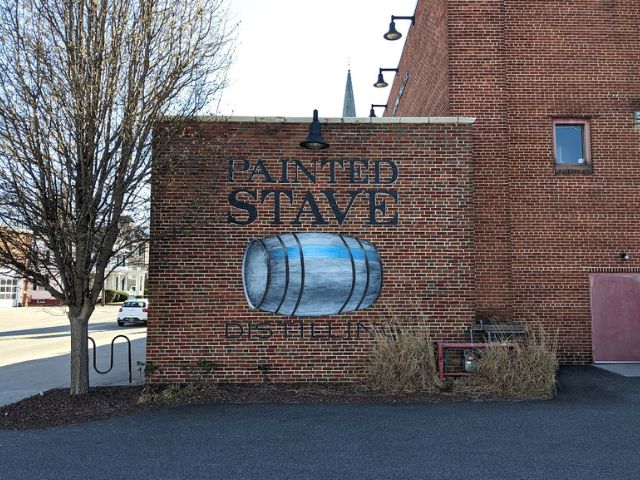
Painted Stave Distilling
Speaker 1 (00:08):
Welcome to Whiskey Lord's Whiskey Flights, your weekly home for discovering great craft distillery experiences around the globe. I'm your travel guide Drew Hanish, the bestselling author of Experiencing Kentucky Bourbon and experiencing Irish whiskey along with the book Whiskey Lore, volume One Busting 24 Big Whiskey Myths. Keep Your Eye out on Amazon this week because experiencing Kentucky Bourbon, the second edition is about to go on free sale. We're going from 32 distillery profiles to 44. I've got an additional 40 whiskey experiences that will be in there. This will include new distilleries that haven't quite opened yet, including the new Heaven Hill distillery that just went online and is finishing up their visitor center for September. It'll have micro distilleries in it, which I've not included before. It'll have stuff like bourbon pursuits, pursuit spirits that is just opening up now on Whiskey Row along with Buzzard Drew.
(01:06):
And there's a whole lot of experiences in Louisville that I wanted to add in there as well. The new Whiskey Thief that's down there, the last refuge. So all of that stuff is going to be in that book. Also, I have updated the history. The old history was embarrassing. It's stuff that I learned when I was on tours and it was so much lore. So all of that lore has been stripped out of there. The real brief history of Kentucky Bourbon is written in this new book and the whole bunch of other stuff. Of course, all of the planning tips and advice, a whole bunch of new tour companies that I mentioned in there and just all updated information. So watch out this week to buy it on presale experiencing Kentucky Bourbon second Edition. Alright, talking about distillery travel. Heading now into a conversation with Ron Gomes Jr.
(02:00):
And Mike Rasmussen of Painted Stave and I left Dad's Hat, made my way down I 95 and of course I got stuck in traffic, so I was supposed to get there in time to meet with Mike and Ron and have enough time to do an interview. Unfortunately, I got there late. So Ron and I just kind of, he gave me a tour around the place and showed me their outside sort of cocktail garden area, the food trucks, the inside cocktail area and the art that they have in there and the distillery itself. And then we sat down and ran through some of their whiskeys, including a Irish pot still style that I was really interested in trying their rye. There was another one I wanted to try, which is their Scrapple vodka, and we're going to talk about it during this episode, but if you want to hear it described by Ron, he actually does that in our extended version@patreon.com whiskey lore. We also get into the story of a little bit of a dispute they had over the first name that they chose for this distillery, but Ron, Mike and I got together online and we went ahead and got our interview done that way. And so let's start off by first asking Mike about this name Painted Stave and how they came up with this particular name.
Speaker 2 (03:29):
We had actually sat down and we had brainstormed lots of different names, like lots of different things that we pulled from history for. We thought we might use it for products, we might use it for this and that. And one of the ones that was on that list was painted Stave and the reference to Painted Stave. I think I found it on microfiche in the university basement when I was doing research on distilling in Delaware.
(03:54):
And it was sort of the classic, they came up with another way of selling booze when they weren't supposed to. So the striped pig, the Blind Tiger, all of those sort of references to places that were selling alcohol that weren't legally supposed to. So someone had come up with an idea of painting a stave on a barrel and you could sort of set it outside your door and turn it. So if you could see the painted stave, then alcohol was available, turn it the other way, you can't see it means that they're out. And it was just sort of a cool reference, but it fit really well with what we wanted to do. We wanted barrels to be a big portion of what we wanted to do. We wanted to do lots of sort of focus on whiskey and things like that. And there was a pretty cool connection with that story. So we sort of delved into that. It didn't take us very long. I think we probably picked that name out off the list within a day or two.
Speaker 1 (04:44):
Yeah, very unique. And it gets me curious about what you found because Ron and I talked about it a little bit. Maryland and Pennsylvania, your surrounding neighbors have their storied histories in distilling whiskey. And the question is, where does Delaware sit in all of that?
Speaker 2 (05:05):
Delaware's distilling history is not, well, it's long, right? Because we've been around for a long time and just about anytime there's people, there's some sort of distilling going on. But as far as an industry goes, it really wasn't super developed. There were a number of small distilleries that were in operations prior to prohibition. They mostly made apple brandy and peach brandy. Those were the main cash crops in the bottom two thirds of Delaware. So there were a lot of apple orchards, peach orchards and fruit that couldn't make it to market was destined to be fermented in, decider and ultimately distilled into brandy. There is some whiskey history that comes from this area. So there are some references to corn whiskey production, that whole saying where there's a mill, there's a still. So we found some stories like that. A fun one was from right where close to where I was living at the time, which was CO's bridge, and we actually did at one point a corn whiskey called Old Koch's corn whiskey, which was quite a bit of fun. Fortunately the Koch family thought it was entertaining as well. Supreme Court Justice Koch paid us a visit one day and told us that he was okay with us using it. So
(06:30):
That day he walked in and Ron just disappeared. Poof. But probably the biggest of the whiskey distilleries in Delaware was called Levy and Gloss Kings. It was based in Dover and they made rye whiskey and they called it Diamond State rye whiskey. It was their premier product. They marketed it throughout Delaware. They co-branded it for hotels and other things in the area. And it was, as we like to refer to it, that sort of Mid-Atlantic style of rye whiskey because we were making it in Delaware at the same time they were making it in Maryland. So we actually played with that a little bit when we first got started. So when we first launched our bourbon and our rye whiskey, we called them Diamond State and we mirrored the label from those old levy and gloss kings bottles and sort of took some elements of their old labels and integrated it into our first whiskey releases.
Speaker 1 (07:27):
So that brings up an interesting question. When you start out a distillery, you probably have a grand vision in mind as for what that thing is going to look like once it gets rolling actually, how would you say that how the distillery evolved is different from what you originally thought when you said we're going to build a distillery?
Speaker 3 (07:49):
I don't think it looks anything like the draft that we envisioned other than we make a few products that we really enjoy drinking with ingredients that we really enjoy. I don't think either of us really imagined we would have two food trucks. We would have an expansive cocktail garden at its peak, 30 plus staff. I don't know that we really envisioned any of that from a branding and product standpoint. I think we both envisioned that we would have a broader distribution footprint at this time, given that was the trend moving into our opening. A lot of those early distilleries were being successful in that sphere of selling.
Speaker 2 (08:36):
We pictured ourselves as sort of the examples that we saw at the time were, and we're talking 20 11, 20 12, 20 13, that they were a tasting room, a place where people could come in, try your products, maybe grab a little sample and really then grab bottles and leave. That was I think, the original concept and that 70% of your sales would probably be coming out of distribution channels rather than out of your in-house channel. And that changed. I mean, I think we were in that spot where the assumptions that had sort of driven the initial growth in the industry between 2008, 2009 to 2013, almost 14 when we opened, changed a lot. And we were fortunate that we didn't lock ourselves into a building and a location and thing that didn't allow us to pivot. So because we're in an old movie theater in a little downtown, it's a really cool building.
(09:48):
It's totally different than what we imagined. We were shopping for industrial park space and we were going to build a little tiny tasting room. And when we started fitting out this theater, when pieces came together to make it, we're like, wow, we're going to have so much space. There's all this room for a bar, there's this room for an art gallery and to do events and all this kind of stuff. But that wasn't in our business plan. That wasn't the intention to become more of a destination distillery where people were going to be coming and spending time hanging out, coming in as regulars. I think we pictured it more like the tourism industry that we had sort of seen where people come in, grab a bottle and go type of approach.
Speaker 1 (10:27):
Your community seems to have embraced the concept. When I was there, your cocktail bar was filled up, the area behind. What would you call that? Would you just call that your meeting area? It's not really necessarily a tasting room.
Speaker 2 (10:43):
We kind of call it our gallery.
Speaker 1 (10:45):
Yeah, what's nice about that? See that's kind of an interesting connection that you've made there. When I first heard the name paid and stave and then I walk in and I see art all over the place, it sort of ties all of that together.
Speaker 2 (11:00):
That was not necessarily intentional at all when we started building out that space and sort of kicking ideas around. We never had it in our business plan that we were going to have an art gallery, but eventually it sort of settled on that could be a fun way to engage people, to engage art, to make this more of an interesting space. And so we invested upfront in a gallery hanging system, a lighting system that we could utilize to help showcase local artists. And that's evolved over time. It's not a revenue driver for us. In fact, we don't make any money off of our art gallery. We actually partner with a local nonprofit, the Delaware Aerospace Education Foundation, and 20% of all art sales go to fund programs that they have to engage young women in STEM fields. So it's not a money maker for us, it's more of a community piece, but it does help create a pretty cool and engaging space. Again, not something we planned on though.
Speaker 3 (12:01):
I would just add that much of what we do, they're a reflection of who we are. Both of us, we both enjoy art and we enjoy music and why not have those things here? Also, there's an element of what we do is art. So it fits very well to the brand. But going back to the painted stave, the initial branding concept, every barrel in the warehouse has a painted stave and those stave colors identify what product is in the barrel and then that would be carried into the branding. So I showed you some aspects of that when we walked through our Rick house and looked at the barrels and you asked me, well, what's in them? And I don't have to go to the barrel head for a lot of those barrels. I can just look at the staves and the stave color and know. But we never fully incorporated that concept into the branding.
Speaker 2 (12:54):
The one thing that we have done with it that is kind of fun was we've done this, we used to do it every year. Now we sort of do it every couple of years where we will take apart a barrel and then get artists, a whole variety of artists to actually take the staves and paint them. And so you have wildly creative things that come out of folks, and then we use that as a fundraising opportunity as well. We auction all of those off and it makes for a fun event. And so if you look around the distillery, you'll find some painted staves hanging around that are sort of representative and right, I'm here in my house. I've got one that I bought up hanging on the wall in front of me. So it's sort of a fun piece. It allows, lends itself towards some creativity and a place where we've tapped into it a little bit and probably will do more over the years.
Speaker 1 (13:44):
Years. Well, and when you go back in to do the tour, the first thing I noticed was that your bottling line is right up there at the stage. So it's kind of like you could take a bow after you bottled your whiskey.
Speaker 3 (13:57):
And Mike touched on this a little bit. We had this just wonderful building that served as a movie theater, opened in 1948 and survived as a single screen movie theater in this town, A town of Smyrna until, I don't know, the early to mid seventies. And when you walk into the production floor, a lot of those elements that were originally part of the movie theater paint columns, the stage, it pretty much left them as they were and just incorporated our equipment needs, our build out needs right into the heart of the existing theater. So it lends itself to a very interesting, not only conversation piece, but an interesting way to present a production floor or distillery. So yeah, sometimes we forget that it's truly a special thing to have living it, right? We're here every day, you've gotten used to it. But to see people come in for the first time and see the painted ceiling from that was originally done probably by hand in 48, still there largely intact. That wow factor is pretty cool.
Speaker 1 (15:15):
I think it's kind of unique too, that you actually own your own food truck. How did that come about?
Speaker 2 (15:22):
We got tired of other people's food trucks not showing up.
Speaker 3 (15:27):
That's the truth. I mean, really it's out. I don't know what, I'm sure there's some saying they're out of frustration comes something useful. We're trying to meet the customer demands by creating programming that would bring them in. And some of that was around food and cocktails. And so in those early days, we were relying heavily on bringing in or attempting to bring in food trucks that would grow along with us. And we'd have Sunday brunches set up and you'd have the food truck come and we would do Bloody Mary's with our scrapple flavored vodka right off the hoof. And then there were lots of occasions where the food truck folks would call us and say, they're not going to make it because they have a breakdown or this, that and the other. We find out that, well, they didn't have a breakdown. They actually went to a different place with, they thought more people would be there. And so you can't have any consistency with your customers and there's a certain level of frustration. The conversation with this owner basically went like, he says, well, if you're serious about having your own food truck, I got a guy in mind. He gave him a call and he came down this kid who wasn't even 21 at the time, he was just 20. 20. Yeah.
(16:51):
And now he's a business partner and he is a scratch cook. And
Speaker 2 (16:55):
The young man was working at one of the local brew pubs here in town, and his uncle had a food truck, he had some experience and he wanted to do more. And so it was local, it was something that fit really well. Both Ron and I grew up in California. We both lived in Texas. We both really liked tacos. And the only tacos in our town was Taco Bell, which doesn't really count. So I think the idea was, hey, we can do something. It's simple, it's fresh, easy hand food. And then we can also, once we have it in place, we can utilize it to do more fun stuff. So we started off with just one. We started off with a trailer that we built and literally built, welded up the frame to it, fabbed all the walls, constructed the entire thing. The summer of 2020 gave us something to do during COVID and launched it in September of 2020.
(17:53):
And then we built a second one. We got a grant from the state to actually help us launch a second one. By February of 2022, we were rolling out a second truck and that one is out on the road all the time. So we always have one at the distillery whenever we're open. And we have one that's able to be out on the road all the time. But it's also afforded us the opportunity to find more ways to integrate food into our programming that we offer at the distillery. So this is that idea, like Ron mentioned about trying to get people in different places. So we'll do pairing dinners and they're not necessarily just tacos. We do the grilled cheese pairing dinner. We do some fancier dinners, some simpler dinners. But having your own kitchen in-house, basically having your own team of fes, it gives them a way to be creative and have some fun. And it gives us another point to engage those customers that now look to us as not just a place for some delicious cocktails, but a place where they can come out for dinner as well.
Speaker 1 (18:56):
So I'm going to give you a list and I want you to tell me what many of these things have in common. Cheese cigars, cast iron cookware, a comfortable pair of shoes and fine wine. If you said that they all get better with age, you're on the right path. But what about whiskey? So many times I overhear conversations about someone's latest whiskey purchase and then I hear age statements being tossed around. There's definitely a contingent of people who are obsessed with finding older whiskeys, but is longer aged whiskey really a better whiskey. Well dig into the science with me as I deconstruct this myth and show how age isn't always the best indicator of quality when it comes to whiskey. It's all covered in my new book, whiskey Lore Volume one where I bust 24 of whiskey's greatest myths. Find it now in paperback on Amazon or through your favorite online bookseller or for your next big trip, grab the audio book from Spotify, apple Books or Audible. So normally I would start off by jumping into what your flagship products are, but Ron brought up the word that probably people in the Delaware Valley know, but beyond the Delaware Valley, unless you've lived there, you probably have not experienced scrapple before. Talk about how that got infused into a vodka.
Speaker 3 (20:34):
I didn't have a lot of experience with Scrapple. I'm a bit of a transplant here, but I did have it in my earliest days of arriving in Delaware. People just take you and introduce you to it. And Mike and I, our earliest days of getting to know each other, we decided to drive out to Louisville, Kentucky for an A DI conference. And along the way, we stopped at a number of distilleries. And of course in between distillery visits there's a lot of car time. So we spent a lot of time talking and getting to know each other better than we had. And on the way back from that trip, we were talking about how some of the distillers were building products that truly represented their local community or their terroir or just how they were hyperlocal. And I just put forth a question, well, what is Delaware known for? What kind of research do we need to do? And that started this conversation around representing something local in Delaware and Scrapple was one of the first things that came out.
Speaker 1 (21:42):
How do you convince a customer to sip on Scrapple vodka?
Speaker 2 (21:46):
Surprisingly, it's not that hard, at least for folks around here. And as we've learned, scrapple is a thing that's all over the country, all over the world. We've gotten people who've called from Russia and Japan and who've wanted to try and find and try this. And it really started off, I mean, honestly, I think it was more of a joke. We would joke around with weird things we were going to make and just sort of drop that in the middle of a list of potential products and see how people reacted to it. But the overall reaction was kind of like, oh, that sounds weird. And there was a bacon vodka out on the market and people sort of thought, oh, this'll be like that, which that is both vegan and kosher, so there's no bacon in that. It's just liquid smoke flavored vodka and it's pretty awful.
(22:37):
So we sat down and I think we were distilling gin, right? We had everything set up and going. We had our little test still that was sitting there and we were joking about the idea and pulled up a recipe for how do you make scrapple, right? If you were going to make it at home and made a shopping list. Ron went out to the store, picked up everything on the list, and we just sort of eyeballed it, threw it all in the pot together. It kind of looked like Italian wedding soup in the pot, not terribly attractive, but what came out was actually really pretty cool. So a lot of sage, a lot of black pepper, these savory flavors. And then we legit threw in just scrapple, like chopped up loafs of scrapple, and you'd get this sort of meatiness to it now, but it's actually really pretty cool because it's not oily. The fats and things that are in the scrapple don't make their way through the distillation system. So what you get is you get this savory set of flavors from sage, black pepper, there's almost a slight saltiness to it. And then there is this underlying, and
Speaker 4 (23:44):
The
Speaker 2 (23:46):
Great thing about having a tasting bar is we could bring a little bit of this out front and pour it for people and test their reactions to it. And the reactions were overwhelmingly positive, which you make. You think we need different customers maybe, I don't know. But it really sort of sat as that joke. And so we decided, all right, well let's make one batch of this. We had a local young man up the street who had asked about making a label for us, and we let him design a label on it. We called it off the hoof. And I mean, really, I thought we would make one batch of this stuff and that would be it. But in the end, people really liked it and we had a lot of fun with it, and we still do make it on occasion at the moment. It's not in stock, but it's one of those things that we could always bring back when the need arises.
Speaker 1 (24:37):
So when you guys were looking for a flagship whiskey to make, what direction did you decide you wanted to go?
Speaker 2 (24:47):
So one of the great fun things about starting to make your own booze is you have to do a lot of research, which we had a lot of fun with. So Ron mentioned we did a trip out to Kentucky. I had probably accumulated a couple hundred bottles of different spirits from the craft producers, the major producers. And so we sat down and we sipped on things. We tried a bunch of different gins, we tried lots of different whiskeys. We talked about the flavors that we were attracted to, the types of things that we liked. And that's the great thing is when you're making your own booze, you get to make things that you like. Now obviously you hope other people like them too or else it's sort of pointless, but that's really where we started. And so we gravitated towards some similar spirits. We knew bourbon was going to be on our list, and we gravitated towards those high rye bourbons, the ones with a little bit a spicier characteristic.
(25:47):
We knew that we weren't going to be heading towards the weeded bourbon sort of direction, but we tied rye whiskeys. We knew that the sort of really a hundred percent rye monoa, Helen style rye type of approach wasn't where we wanted to be. We liked a little bit more of the balanced rye flavor that comes from that Mid-Atlantic style that integrates a little bit of corn. It's a little bit of a different character, so we could narrow it down in those ways for a couple of those flagship products, like for the whiskeys, this is those sub styles that we're interested. When we sat down to do the gin, we did tons of infusions, we put together a whole laboratory full of different tinctures and sat down in my basement pulling out a milliliter of this, a milliliter of that, and playing with those different flavors, trying to see what we could capture as something that was a gin, something that would work in the way that we wanted it to, but was more in that contemporary botanical forward style of gin.
(26:54):
We knew we weren't going to try and make London dry gin, right? Somebody else already does that. They do a great job. So let's play with some flavors that we can really capture. And I think that sort of drives it. And then it's a lot of fun to then get to go back and see other people get excited about those flavors, those things that you've picked out and have worked to craft based on your palette. Nothing or not everything resonates with everybody out there, but the overall response has always been very, very positive. And I think that it's reassuring. It makes that you're on the right path in a lot of different ways.
Speaker 1 (27:32):
So when somebody is coming to Delaware and they are thinking, man, I want to stop by the distillery, but they maybe want to pair something else along with a visit to the distillery, what kinds of things around Smyrna would you suggest for people to check into? So
Speaker 2 (27:51):
Our largest tourist attraction in our area, and we get a lot of people that come through for Bombay Hook, national Wildlife Refuge. It is one of the premier locations in the country for birding. If you want to go out and see like 30 bald eagles just sort of flying around and doing their thing, migratory birds, it's a really, really cool, wonderful resource. And it's just a couple of miles down the road from us. So that is a big tourism draw for our area. We see people from all over the country and all over the world that come through for that. And then we obviously want to grab them onto the distillery as well. The other big thing, we're a small town. We're about 14,000 people and we're mostly a bedroom community. The Dover Delaware is the nearest large town. It's about 12 miles to our south, and that's where most of the hotels are, things like that.
(28:48):
So if you're planning a weekend, chances are you'll spend some time with us. Maybe you'll check out Bombay Hook. But there's a lot of cultural things in and around Dover. Some of the history museums, our archives, art museums, we're one of the oldest state capitals. It's one of those really classic lots of red brick buildings. It's quite beautiful. So we see a lot of folks head that direction. And depending on the time of the year, if the weather's right and all of that, there might be a festival or something going on there. We also have Valleys a casino in Dover Raceway. We always see people come through who are in town for the NASCAR races
Speaker 3 (29:26):
In the Dover Air Force base. They have a Air Mobility Command museum that's quite notable. It's a great spot for the kids. It's a great spot for adults.
Speaker 1 (29:37):
Well, I really enjoyed the hospitality and getting a chance to chat both of you and learn your backgrounds and the development of this. It's always fun to see how craft distilleries kind of evolve over time. And thank you so much for being on the podcast, and I wish you lots of luck and look forward to my next visit out there.
Speaker 3 (29:56):
Awesome. Look forward to seeing you, drew.
Speaker 2 (29:59):
Yeah, thanks Drew. Take care.
Speaker 1 (30:00):
Cheers.
Speaker 3 (30:01):
Cheers.
Speaker 1 (30:02):
Well, I hope you enjoyed this visit to Distillery number 17 on the Whiskey Lo Whiskey Flights great 48 tour of America's great craft distilleries. And if I piqued your interest in visiting Painted Stave distillery, make sure to head to whiskey-lo.com/flights where you can view the profile of this and now over 900 other distilleries across the globe. Well, I said that I only have one more stop in the Mid-Atlantic region, but it's not entirely true. I am on my way across the Delaware River heading into New Jersey next. Well, not exactly next. Before I dive into New Jersey, New York and New England, we've got a cross country detour that we're going to bring up next week. But before I tell you all about that, if you're still on the fence about visiting Painted Sta distillery, let me give you my three reasons why I think you should have this distillery on your whiskey lower wishlist.
(30:57):
First, it's a great place to soak in the local vibe, see some local art, enjoy a cocktail inside, or enjoy a taco from a highly dependable taco truck while you're sitting outside soaking in the sun, or taking a break with friends while you discover Delaware. Second, Ron and Mike are great hosts and they've instilled a great sense of community and hospitality in their team. And third, obviously, they're making some really creative spirits. If they're willing to stick some raw pork in their still, there's no telling what else they might do. Well, I hope you enjoyed this visit to the Painted Stave as I prepare for my great New England journey. I'm going to toss in a bonus episode next week. We are heading to a distillery virtually, but it is a distillery that I have been to before. And I'm going to tell you, it just may be my favorite distillery in North America. It's head distiller, one of my favorite people in the business, and I've had him on whiskey, Lord, the interviews, we're going to find out more next week about who that is and where I'm headed. To make sure you have your ticket to ride along by smashing that subscribe button on your favorite podcast app. I'm your travel guide Hanish. And until next time, cheers and Slava for transcripts and travel information, including maps distillery planning information more@twowhiskey-lordlo.com slash flights. Whiskey lords of production of Travel fuels Life LLC.
About Painted Stave Distilling
Tastings available, ask about tours.
Take a Whisky Flight to Painted Stave Distilling
Map to Distillery
Note: This distillery information is provided “as is” and is intended for initial research only. Be aware, offerings change without notice and distilleries periodically shut down or suspend services. Always use the distillery’s websites to get the most detailed and up-to-date information. Your due diligence will ensure the smoothest experience possible.