
Liberty Pole Spirits
Drew H (00:08):
Welcome to Whiskey Lore's Whiskey Flights, your weekly home to discovering great craft distillery experiences around the globe. I'm your travel guide Drew Hannush, the bestselling author of Experiencing Irish whiskey and experience in Kentucky Bourbon. And today we are going to be heading to Washington County, Pennsylvania, an area that is rich with stories surrounding the often misunderstood whiskey rebellion. And today as we travel to Washington County just south of Pittsburgh, we're going to dive into some of that history as well as some fascinating whiskeys as we visit with Jim Huff, the co-founder of a family run distillery called Liberty Pole Spirits. And as we jump off of I 79 and onto us 19, just a couple miles north of Washington, just south of our destination, let's take a moment to discover the history of the rebellion and some of the great landmarks that we can visit while we're in the area.
(01:07):
Welcome to Washington County, Pennsylvania, a place known for its heightened role in one of America's earliest internal conflicts. The Whiskey rebellion is often painted as farmers who didn't want to be taxed for their liquor production, but in reality, the farmers in this region, most of whom were retired soldiers working on the land that they'd received through land grants for their military service were cash poor and used the whiskey that they produced to barter for the essentials of life. But when George Washington's right hand man and the Secretary of Treasury, Alexander Hamilton placed his excise tax on whiskey, he had no interest in these pesky farmers who would be hard to collect taxes from. So he geared the tax towards those large industrial distilleries on the East coast, the ones who could pay with cash by forcing the farmers to pay their taxes in hard currency. And with none on hand, these farmers started seeing their stills being confiscated.
(02:08):
Soon they would attack revenues and it wouldn't take long for the entire region to be primed for battle against the unfair way this government was taxing them. It would become the first major test to the newly formed United States and its federal authority. Now, visitors to the area will find landmarks from this era all around the county offering up tangible connections to this turbulent time. One of the best is the David Bradford House and Whiskey Rebellion, education and Visitor Center in Washington. Bradford was one of the leaders of the rebellion and his well-preserved home provides insights into the period. If you're in the area in July, make sure to attend the Whiskey Rebellion Festival featuring historic reenactments, street theater, performances, music, food, and more. And for those interested in exploring nature, the county offers numerous trails and parks such as the Mingo Creek County Park where you can walk over covered bridges, hike, fish, and picnic. There's plenty to see and do while learning about the fascinating history of the Whiskey Rebellion Washington County.
(03:22):
And as I head up racetrack road towards the distillery, I notice that there is a NY Brothers restaurant within walking distance of the distillery. If you've never heard of NY Brothers, well you apparently haven't been to Pittsburgh beyond the Steelers, pirates and Penguins, the most frequently mentioned thing, whenever I say Pittsburgh is Ani Brothers and those Ani brothers sandwiches. So what is it that makes those unique Cole slaw and french fries? You go, well, that's not so weird. But wait, they put them on the sandwich. And for me, I am a big fan of a Ruben. I'm not necessarily a fan of a Ruben with potatoes on it, but the Pittsburgh and cheese, that's much more my speed. Some fries, a little steak and potato going on there. And the first time I had it, I had it along with an Iron City beer. So I don't know if you could get much more Pittsburgh than that.
(04:24):
Now for today's visit, we're going to be meeting with Jim Huff, one of the founders of Liberty Poll Spirits. And Jim and his family have dedicated themselves to reviving the legacy of Manga Hala Rye, as well as celebrating the rich history of the whiskey rebellion in Western Pennsylvania. And you may be asking yourself about this name, Liberty Pole and where that comes from. That's not the only name associated with them that has some historical ties. They're known as the Mingo Creek Craft Distillers. So I wanted to start out by asking Jim to explain those two names.
Jim H (04:58):
So when we were putting a business plan together, you needed to attach a name to it. And at that time we noticed that a lot of the easy to remember high impact names that we were coming up with were already trademarked Rebellion and things like that. We did in our research find that kind of the core protestors against the tax on whiskey called themselves the Mingo Creek Society, and that was a group of farmer distillers in our area and they were the primary rebels against the tax on whiskey. You see above my head is Alexander Hamilton hanging upside down. They were the core protestors, so we were able to secure that as our LLC name, but that never really resonated with people that we talked to. It was hard to remember. It didn't really carry a lot of name recognition. So we continued to look for a brand name that would really resonate, that would be impactful, that would allow us to tell a story of the whiskey rebellion era here in Western Pennsylvania.
(06:10):
And we came across this notion of a liberty poll. Now, liberty polls actually have their origin in ancient Greece and have always been a symbol of protest. But during the colonial period in America, they were very common as a symbol of protest. Before we gained independence, they were flown to protest English rule. Once we became a country, the first kind of big dust up in the new United States was this taxon whiskey. So Liberty polls became a very common thing to see in western Pennsylvania protesting the taxon whiskey. And we just thought that was a really impactful brand and it really kind of captured our story that we were trying to tell. And most importantly, it hadn't been trademarked in any other adult beverage category. So we were able to grab that.
Drew H (07:06):
It's interesting to think of the misconceptions. I even had them when I first started researching the whiskey rebellion, this concept that we associate George Washington with it, and it wasn't really, George went to Carlisle, Pennsylvania in the reading that I did, which is just west of Harrisburg. And it was at that point that he basically, there was a liberty poll there actually at the time he arrived. And it's interesting to note that a lot of people think that he rode all the way out into Western Pennsylvania, but it's actually that guy in the picture behind you who's turned upside down that has much more responsibility. It's like it's his tax, and Washington then sends him there. And I find it interesting also that all of this going on in Washington County. So all these relationships, did you have to kind of go in and re research all this when you started telling your story? I think there was a lot of misconceptions about the whiskey rebellion that these were farmers who didn't want to pay tax versus that these were farmers who couldn't pay the tax because they wanted it money rather than in whiskey, which was what they used to barter there for their goods
Jim H (08:21):
With. You hit the nail on the head. I mean, Washington County in 1791 was pretty much as far west as much of a wilderness area as anybody had made it at the time. And they weren't making whiskey here as a business. It wasn't a profit center. They weren't generating, there was no currency out here. Whiskey was a means of survival. What grains that they were able to grow of those grains, whatever they couldn't consume as food or trade, that leftover grain would go bad. It would mold, the mice would get to it, but if you turn it into whiskey, it lasts forever. So it was kind of a means of survival. It was a means of maintaining their grains and it became a form of currency. And so you're right, that tax was heavy handed towards the western part of the country because it was required to be a cash payment and there was no cash here.
Drew H (09:26):
So once you decide to get in and start distilling, did you have any distilling in your background and how did you get yourself to a point where you learned to distill?
Jim H (09:38):
Allegedly, I may have been the proud owner of a 10 gallon home hobby still that I received from my wife and then middle school aged sons back in the early two thousands, they wanted to get me a beer making kid for Father's Day, and I told my wife, yeah, that's great, but I really don't want to make beer. I'd love to learn how to dabble in distilling. So I had a 10 gallon still that I practiced and worked for about 10 years just as a hobby. And that's where we cut our teeth on learning the process. Very small scale, but the principles and the concepts don't change. They scale up pretty comfortably. From a 10 gallon operations who we started with a 300 gallon operation, the material handling becomes a lot more difficult. It's a lot harder to move 600 pounds of grain around than it is to move 20, but other than that, it really does scale up. And that kind of gave us our start in learning how to do the process once we decided to go for it and create a business. We did then attend some, I don't want to say distilling classes, but we did attend a few seminars at functioning existing distillers to kind of learn the business aspect of all the government reporting and things like that.
Drew H (11:12):
Yeah, the things that distillers as of the civil war and after really had to start paying attention to. I mean, you think about those early distillers who were upset about the tax, they weren't really that organized way back in the late 18th century, but by the 19th century, once the moonshiner culture started building up and people were having to figure out all the business side and all the taxes and regulations that were going on, those guys in western Pennsylvania had it pretty easy back in the day.
Jim H (11:45):
That's right. That's right.
Drew H (11:48):
You're going to start a distillery. I would imagine that you probably already had some spirits that were favorites of yours. What were you drinking back in that day?
Jim H (12:00):
Even when I was a hobbyist and kind of home distilling, I focused on strictly whiskey. I developed mash bills that actually we still pretty much use today for our manga rye and our bourbon. My wife was and still is a big is of whiskey fan. She loves ped scotches. So that's kind of where our ped product line comes into play, and that was something that even on my home still, I created a ped bourbon to try to get her to buy into this burgeoning hobby that I had because she didn't like the bourbon or the rye that I was making, which I thought they were pretty good, but I needed to throw some Pete at her to get her to see the potential.
Drew H (12:55):
Had you seen any Pete at Bourbon before? Because I've never heard of a peed bourbon until all of a sudden I started looking into what you were doing.
Jim H (13:04):
I had not. It turns out that once we became legal, we opened up in 2016, one of our first aged whiskeys that we rolled out was a ped bourbon. I found out about that time that Kings County in Brooklyn, New York, they had already rolled out their own ped bourbon. So at the time I just found out about them. I think there are a few others that do a peed bourbon now, but it's still a pretty kind of uncommon expression of American whiskey.
Drew H (13:39):
So one of the things that of course Western Pennsylvania is known for historically, and of course it's now making a fine comeback is Mangala Rai. Am I saying it right? That's always the first question.
Jim H (13:55):
So you are pronouncing it as Wikipedia would have you pronounce it Mangala? I grew up here and I've always pronounced it Monongahela, but I think you're right. I'm wrong, but I'm too old to change. You say it better than most people.
Drew H (14:14):
It's like when I go home to Michigan and they say, well, you have a southern accent. And I'm like, I don't think I have a southern accent, but I definitely don't have a Michigan accent. Yeah, it's funny, but that's one of those things that it's funny to watch. People struggle over it when they're trying to say it and they're not quite sure whether they're getting it right or not, so they stumble all over it.
Jim H (14:38):
Right?
Drew H (14:39):
So talk about the style itself because there are some camps that say there is a style and there are other camps that say, you know what? They were making whatever they made back then.
Jim H (14:51):
So we tend to look at it Drew as there are kind of two generations of Monongahela style whiskey. There's the colonial version, which is kind of what we honor. The whiskey rebellion era, again, 1791, the farmers here, we don't have great soils. We don't have a long growing season. Rye was a very hearty grain. We have a story when we give people a tour and we show them our grain bins and we've got big thousand bushel grain bins outside. And when we filled one day last year, the grain elevator kind of wasn't situated right above the loading door and we missed and we spilled a decent amount of rye grain onto some river rock behind the grain bin. Well, sure enough that rye grew literally there was nothing there but rock. And to me, that's the most beautiful example of why western Pennsylvania became a rye whiskey area.
(15:56):
Rye was such a hearty grain back then that the farmers grew it and they were mainly Scots Irish and they knew how to distill and they knew how to, the rye grew very well here, so it was a natural that they were going to distill rye. Now there is kind of a lot of disagreement on what exactly is monga halo rye. It's very easy to kind of pinpoint pre-prohibition monga rye in the industrial age in the 19th century, it was high rye, typically in 80 20, Nashville, 80% rye, 20% malted rye often done on a three chamber. Still it was aged in heated, heated brick warehouses. That's kind of the common no corn in the Nashville, you hear that one a lot. That's kind of the common definition from an AAHA rye during the more industrial age. But during the colonial, there's a lot of disagreement in the sense, what was the Nashville, nobody knows.
(16:59):
It wasn't written down. These farmers, they were not going to let corn go bad because I can't put corn into a monga ha rye. They didn't care they were going to distill their grains before they went bad. And so if there was wheat or if there was rye in excess, they would certainly have added that to their whiskey mash. It still would've been a very high rye mash bill. So we don't necessarily buy into the fact that it had to be no corn in the mash bill. Our mash bill actually has a bit of wheat in it. We like wheat just for the effect of what we think wheat does to a whiskey. We love that flavor edition that it adds. We think that the colonial monga ha rye was again, pot distilled, sweet mashed, high rye kind of made into the Monongahela Valley, and that's where we really checked those boxes because we are in the Monongahela Valley. Herman Melville wrote about Monongahela Rye and Moby Dick Ben Franklin wrote in his diary that he was asked about Monga Rye when he was in Paris. So I mean, it's been a style that has never been codified, it's never been really recorded anywhere, but I mean it's arguably the most famous whiskey ever. I mean, it's been around forever and we're just honored and really excited to be able to release what our version or interpretation of that classic historical whiskey is.
Drew H (18:36):
So in tasting and nosing this, when you are taking people on a tour, you probably have a sense of what you appreciate out of your whiskey. Do you often get people who are bringing up tasting notes that either you're saying, wow, that is really different and now I need to go see if I can find that in there. What is kind of the oddest tasting note you've probably come across that you think might actually be in there?
Jim H (19:10):
You've been in this business long enough that you stop trying to chase tasting notes because as you know, everybody's palette is different and everybody's life experiences are different, and that's really where Tasting Notes emanate from is kind of your life experience, what you've lived, what this taste is reminding you of in your frontal lobe. Yeah, we do hear a lot of tasting notes. One of the more common ones I get from the old Monga halo rye is chocolate. And for the life of me, I don't get chocolate. I think a lot of times people's experience with rye comes from tasting multiple brands that all originate from 95 5 mg p rye. And so they kind of have this expectation that all rise are going to be really bold and really spicy and just punch in the face. And that's kind of my favorite thing about walking people through our rye is we're not a 95 5 rye. We have a little bit of wheat in our mash bill Rye doesn't have to be punch you in the nose. Spicy rye. To me, I love the subtle herbal of a rye whiskey much more than that big spice bomb.
Drew H (20:38):
Yeah. Well, on my tasting notes, I would give you cinnamon spice and orange marmalade come through for me on that. I love it. Yeah, and that's great about all of these. Rye is such an expressive grain and to me this talking about barley and what it does for scotch whiskey and the varieties that you can get from it, it just feels like even in Pennsylvania that you're going to, in different regions get a completely different flavor out of the rise that you're distilling, plus the ways you're distilling them.
Jim H (21:18):
Right? And what's your barrel entry proof? How low are you going into the barrel at? And you're going to pull out some of those sweeter notes. The lower the entry proof in the barrel is, and I think that's one of our, across the board, across all of our whiskeys, we have a house profile of just a little sweetness in the whiskey. And I think that's due to our barrel entry proof being pretty low. We're able to co some of those wood sugars out maybe at a little more rapid pace than if we went in at a high entry proof.
Drew H (21:57):
Talk about the new distillery campus and the tours that you're giving through there. What do people experience when they're going through the process of the tour?
Jim H (22:08):
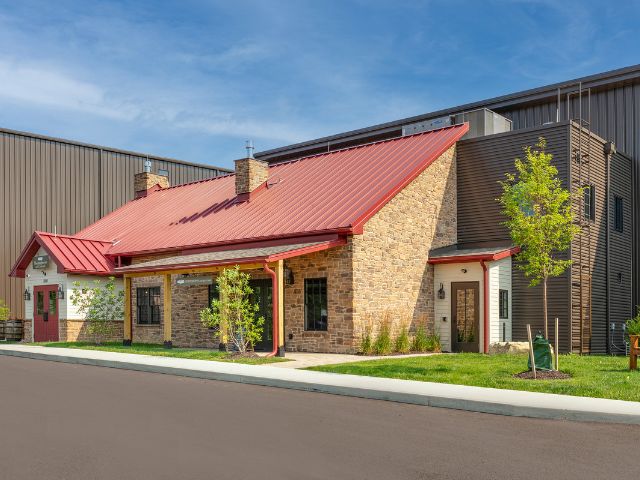
So you can come to our, we call it the meeting house. Again, that's an homage to a colonial tavern, a place where 18th century folks could meet. We have a meeting house that looks like it was transported from 1791. It's All Stone. We have a lot of people ask us, was this building here? Where did you guys move this from? And it's modern building material, but it looks like a colonial tavern. We do a great cocktail program here. We have a great executive chef, we have some really great food. You can come in here anytime we're open. And that is not, you don't need to reserve a spot on a tour. Now that said, we do have tours. We run tours on Fridays, Saturdays, and Sundays. They're about an hour and a half each. We go deeply into the whiskey rebellion and the origin of Liberty polls and how Western Pennsylvania is just the epicenter of that little known part of American history.
(23:27):
It's soup to nuts. It's a pretty in depth tour. We go into the production area, we talk about the grains and the milling and the mashing, fermentation, how that all works, stripping spirit runs, barrel entry proof. And then we go into our Rick house and that's probably the thing that I'm most proud of with what we've done here is we actually put up a five story traditional Kentucky Rick House. We hired music construction out of Bardstown, Kentucky. They came in here and basically erected a five story rick house for us. If you walk into that Rick house, you might find yourself feeling like you're in Lexington, Kentucky or Louisville. It is very true to the style of Kentucky Rick houses. We talk about barrel aging and the different floors and the microclimates and why we wanted a rick house, why we wanted horizontal storage versus palletized storage.
(24:36):
What the different microclimates do, whether this south facing wall is going to age whiskey differently than the north facing wall. There's so much that's fun to talk about that until we really kind of opened up here a year ago that you almost had to go to Kentucky to experience kind of a soup to nuts distillery. And that's something that we were really excited to be able to offer people that maybe didn't have a weekend to drive to Kentucky but still wanted to experience a distillery. We end the tour with a tasting of all of our whiskeys and people go home with a monogrammed etched Glen Caren glass. Now we've just started a barrel house immersion tour that we do one Sunday a month while the weather's nice. You don't want to be in the Rick House in February, but when the weather's nice, we do a barrel house immersion tour where we've pulled four barrels and we let the people on the tour thief from each of the four barrels sample the different barrels and we talk about the whiskey in each barrel, and then depending on your pallet and which barrel you found to be your favorite, then they bottle their own bottle right from the barrel.
(26:03):
We take them in, we run it through the labeling machine, we give them a custom label that they fill out and they take their own bottle home. So those are kind of our two tour experiences right now.
Drew H (26:17):
Very nice. Well, Jim, I love that you're telling the story of Western Pennsylvania and getting people engaged in that history, which is such a critical part of the formation of any country, trying to get its citizens to understand what the new world is going to be like, as well as bringing back Monga healer rye and giving people kind of a sense of what that is from a historical perspective and what you're trying to do with it. So congratulations on getting together such a great facility for people and hopefully people will put you on their itineraries.
Jim H (26:56):
Thank you, drew. I enjoyed talking to you. It's an honor. Been following you for quite a while, so yeah, we're love talking to you. Appreciate it. Thank you so much. Cheers. Cheers.
Drew H (27:10):
I hope you enjoyed this virtual flight to Liberty Poll spirits. And if I peaked your interest in traveling to the distillery, make sure to head to whiskey-lord.com/flights where you can view the profile of Liberty Poll spirits along with a growing list of worldwide distilleries that we're featuring on the show. Then dig a little deeper into the whiskey lore online distillery travel guide. Use the heart feature to pick out some of your favorite distilleries or log in with a free membership and bookmark your favorite distilleries and add them to your very own whiskey lore wishlist. We've put planning tools out there, maps, tour dates, and booking links for over 300 distilleries worldwide. So start your journey@whiskeylore.com slash flights. Now stay tuned because in just a moment, I'm going to have some closing travel tips if you plan on visiting Liberty Poll Spirits. But first, it's time for this week in whiskey lore.
(28:09):
It was 83 years ago this week. The William Grant and Sons of Dufftown Scotland placed an ad in newspapers across the globe selling their famous for a half a century, grants Lur Scotch Whiskey, a blended scotch made of spirits from their Glen Fit and Vinnie Distilleries. And with a war underway against Nazi Germany, quality whiskeys were becoming harder and harder to find as distilleries were turned into manufacturers of industrial alcohol or used for other military purposes. But at the close of the war, scotch whiskey demand went through the roof, yet it was still an era of blended scotch. Single malts also called straight or pure malts were mostly prized in Scotland with only pockets of interest elsewhere. But according to lore, in 1963, William Grant's sons took a bold step and became the first to promote single malt scotch whiskey outside of Scotland. Their Glenn Finnick in the tri cornered bottle was said to be the groundbreaker, but newspapers that ette tell another story.
(29:15):
In 1961, Ian Crawford touted in the London Evening standard Pure Malt was the finest drink in the world, and that there was plenty of it floating around London, not only Glenn Fick, but also Glenn Levitt, Glenn Morgie Talisker, and the biggest at that time, Glenn Grant. A year later in 1962, the London Daily Telegraph had ads for 10-year-old Glenn Morgie, pure old Highland malt. And Glenn Livet was seen in the Louisville Courier Journal that same year selling for $10 and 90 cents a bottle, which was double the price of the most expensive bourbon. And that year also Glenn Livet would be making the rounds as straight scotch whiskey in Northern California. It was soon to be distributed in 11 Western states, but these are still not the earliest mentions. On record outside of Scotland. In April of 1960, the London Evening Standard told of a flood of single malts that were heading south of the border with Glenn Grant's 10 year and 20 year olds and LA and Glen Morgie leading the way.
(30:21):
WH Stoneman of the Chicago Daily News Service in 1959 would note that American whiskey purists insisted on straight malt whiskeys from Glenn Levitt Glenn Grant, and the most famous of Isla distilleries. And in my limited searches through those old newspapers, I found the king of early promotion of scotch. Single malt whiskey, especially outside of Scotland, was Lare. Their 14 and 10-year-old Lares were listed as unblended or straight and appeared in newspapers from Florida to New York throughout the 1950s. In fact, the earliest record I can find is a 14-year-old straight malt lare that was sold at Waldorf Liquors in Washington DC in December of 1949. Now, of course, I didn't look up every single brand name. So there are possibilities that there are other brands that were advertising single malt whiskeys or pure malt whiskeys earlier than that. Now, while Glenn Fiig did become a champion for single malts throughout the mid to late sixties, being first out of Scotland was going to be a tough claim to make. Just goes to show that in the battle of firsts, history is a tricky animal, especially when it comes to whiskey.
(31:35):
Well, as we prepare to leave Liberty Pole Spirits make our way to our next distillery destination. Let me give you two additional attractions in the area you might consider putting on your list of places to visit. First, just a short drive from the distillery is the Pennsylvania Trolley Museum where you could step back in time and ride beautifully restored streetcar. And another nearby G is the Duncan and Miller Glass Museum, which showcases the rich history of glass making in the region with an impressive collection of decorative glassware. And as we close out our trip to Liberty Falls Spirits, if you are still on the fence about the visit, lemme give you my three reasons why I think you should have this distillery on your whiskey lower wishlist. The first is that if you are at all interested in the whiskey rebellion, you get a whole lot of that history here and you'll have an opportunity to get your picture taken with the upside down Alexander Hamilton painting so that you can show your support for those Pennsylvania farmers of Old Second.
(32:35):
If you're a fan of Pete, well you won't want to miss out on the memorable tasting that goes on these unique whiskeys, including their innovative peed bourbon, providing a distinctive flavor that's truly their own. The third is the family atmosphere and that United Spirit at Liberty Pole Spirits in the pursuit of bringing back the historic flavors of Western Pennsylvania. Well, I hope you enjoyed today's episode. Next it's time to hop into the car, make our way back to the Baltimore Washington International Airport. I'm going to head back home to Greenville, South Carolina, and then next time you join me, I'm going to be starting one of the biggest adventures I've had so far. I call it the great Midwest Great Lakes tour of 2024, and it is sure to be filled with some amazing distilleries and spirits as I hit Michigan, Wisconsin, Indiana, and Minnesota. Make sure to subscribe to the Whiskey Lore podcast so you don't miss any of the great whiskey flights to come. I'm your travel guide Drew Hanish. And until we meet again, cheers and Slava for transcripts and travel information, including maps, distillery planning information and more. Head to whiskey lo.com/flights. Whiskey lowers of production of travel fuels life LLC.
About Liberty Pole Spirits
Tours available.
Take a Whisky Flight to Liberty Pole Spirits
Map to Distillery
Note: This distillery information is provided “as is” and is intended for initial research only. Be aware, offerings change without notice and distilleries periodically shut down or suspend services. Always use the distillery’s websites to get the most detailed and up-to-date information. Your due diligence will ensure the smoothest experience possible.