
Meinelschmidt Distillery
Speaker 1 (00:08):
Welcome to Whiskey Lord's Whiskey Flights, your weekly home for discovering great craft distillery experiences around the globe. I'm your travel guide Drew Hanish bestselling author of Experiencing Kentucky Bourbon, experiencing Irish whiskey, the brand new book that bust 24 of Whiskey's, biggest myths, whiskey lore, volume one. And today I am headed to a distillery in Maryland, one that I've been interested in traveling to. I talked to Josh over at Black Shirt Bourbon Society and he said, yes, this is definitely one you should check out. It is mine, Schmidt Distillery, and it is in Hagerstown, Maryland. The town I have been to in the past, but it was many, many years ago. And I don't remember much about the town other than it seemed like it was somewhat small. But I'm looking around today and it doesn't look quite as small as I remember it. It was an interesting day because I actually started out, drove through Harpers Ferry, West Virginia, and then made my way up into Maryland and stopped at the McClin Talk Distillery.
(01:08):
Did a nice walkthrough, Frederick, and enjoyed the city park downtown, and then got a chance to sample some of the whiskeys over there at McClintock with Braden. Now you may remember that name, McClintock from earlier in our whiskey flights. Well, that was when I was doing virtual whiskey flights, and so I didn't get a chance to actually meet Braden face to face, and it's been bugging me ever since. I've been wanting to go there. I really enjoyed our conversation. So did that and then made my way over this direction. I want to say it was about 45 minutes, a little over that to get to Hagerstown. And now it is time to jump in and actually do a conversation with our next founder, Colt Myel Schmidt, who's a Navy veteran and his wife Chelsea, run this distillery. We're going to learn about how they got into distilling whiskey, but before we jump into all of that, I actually wanted to start off by asking court about how he and Chelsea met a little interesting story, so I understand.
Speaker 2 (02:07):
Yeah, so it's kind of funny. So I was the president of the Arc of Washington County. They help intellectual and development disabled children, adults with job placements, housing, everything. And my future wife, she was a special education teacher and the school system, and we did a fundraiser, the Arc did a fundraiser called Dancing with the Arc Stars. And since I was the president of the board, my job was to make sure that it went off without a hitch. My future wife, she actually in her younger years was a dancer and they picked her and a couple other people to dance in this fundraiser and one of the male dancers backed out. And since I was the president, I had to hop in there and dance.
Speaker 1 (02:53):
Nice.
Speaker 2 (02:54):
And I cannot dance. It's a fundraiser and it's a great organization. It's one of my favorite. And so that's where I met her, even though we weren't dance partners, that's where we met.
Speaker 1 (03:07):
Well, you said it went off without a hitch, but eventually there was a hitch.
Speaker 2 (03:11):
Yes, eventually.
Speaker 1 (03:14):
So what got you two interested in owning a distillery?
Speaker 2 (03:19):
We like to travel and everywhere we go, we love to find these little craft distilleries everywhere. The industry's amazing, the people are great, and we became friends with a lot of people and it's just a phenomenal industry. And then in 2019, Maryland changed their laws. So prior to 2019, distilleries could not have a cocktail bar. They couldn't serve beer, they couldn't serve wine. There was a lot of restrictions on it, and basically you could only wholesale. Well, in July of 2019, they changed that, created what's called a Class nine distillery where you were allowed to have a cocktail bar and try drinks how you would, and you could have beer and wine in those spaces also. So I called a couple of the friends that we made over the years and I was like, should we do this? And they're like, yeah, to be the first one in the area. That's great. So six months of bugging my wife at the time, and she'll tell you that she eventually caved and I put the deposit on the still in January of 2020.
Speaker 1 (04:20):
Wow.
Speaker 2 (04:21):
Perfect timing.
Speaker 1 (04:22):
Yeah, perfect timing for a little event that kind of tossed the world into a bit of chaos there, especially if you're talking about doing a cocktail bar.
Speaker 2 (04:30):
Yes. So thing was we opened a lot later than we thought, and I can't blame anybody, but we couldn't get materials, we couldn't get, the front door was I think six months late and for some reason you're not allowed to open without a front door, but we had missing windows and just different things. So it took a lot longer to open than we anticipated. What I did is instead of marketing for that first year we opened, I just spent everything that we planned for marketing into production. And so we put a lot away that first, first year. So ended up helping us because we were able to get aged spirits, somewhat aged spirits quicker.
Speaker 1 (05:12):
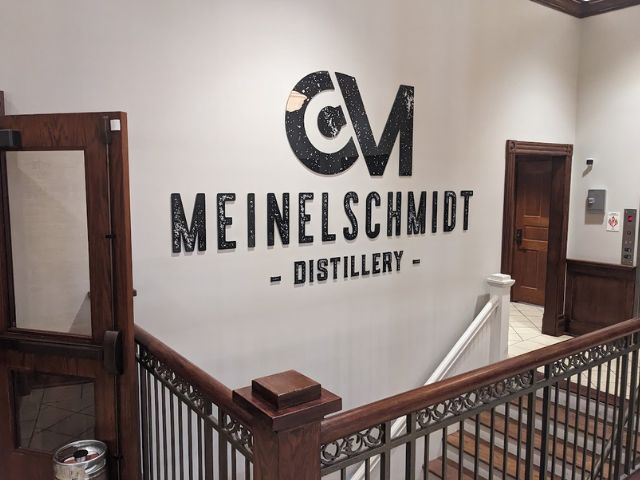
It's a very uniquely designed distillery because you're basically built into an old Masonic lodge, and when you come into the distillery, the cocktail bar is the first thing you see. Then there's table seating and a glass window, and you'll see the top of the column still. But then as you peek down below, you'll see that the entire distilling operation is in the basement. What did it take to be able to rig this up? I'm guessing that you basically had to go to the city and say, we're cutting a hole in the floor.
Speaker 2 (05:49):
So for the spot, it was a hole in the floor, yes, for where the cops came out, but it was a little more extensive. We actually didn't have a wall and we had to take down a wall, bring the still and everything through where the wall is, and then build the wall up afterwards. So it was more than just cutting a hole in the floor.
Speaker 1 (06:08):
Yeah, okay. Yeah. Well, and sometimes, I mean, this is a beautiful building. It has that design style that lets you know this is not a modern building. This is coming from when they really put a lot of detail into the design. Talk about did you grow up in Hagerstown?
Speaker 2 (06:31):
Oh, so I grew up in Sharpsburg, but that's all of 15 minutes from Hagerstown. So grew up in the area, graduated from high school in the area, then spent seven years in the Navy and came back in 2004.
Speaker 1 (06:43):
Okay. So Masonic Lodges, it's a secret society or it's called a secret society of course. And sometimes in towns I've lived in, they've talked about the Masonic Lodge and kind of there's this mystery around it. What was your knowledge of this building before you moved into it?
Speaker 2 (07:02):
Well, before I moved into it was I just knew it was a Masonic lodge
(07:06):
And that's it. But since we went in there, some really cool features that we found out and then talking to some of the masons, what I didn't know is the very first post office in Hagerstown was actually the front space of the Masonic Lodge. The Masons built the very first post office for Hagerstown, and there's this giant safe down there. Unfortunately, it was the post office safe. I was hoping it had the king's jewels or something in it, but it is really cool. And there's some definitely, you can see where there were some underground tunnels that were marked off. It was kind of neat, but they're now all closed, but there's some really cool history and the woodwork in some of the spaces is just absolutely amazing.
Speaker 1 (07:47):
Yeah, I mean when I walked into it, I would not have really thought of or been able to envision what the Masonic Lodge looked like. How many things did they try to preserve in there? What would you look for if you're walking in to see elements of the old lodge?
Speaker 2 (08:03):
There's a lot. So first one thing I like to say is that hole that we cut out of the floor, those old floor joist, we actually made the bar out of those old floor joist, so we reused all of that wood, but the lights in the, I'll say atrium there, they're original. So they found those in the basement and they repurposed them and put them back up. And you'll see a lot of the symbols in there, especially if you go up to the second floor where there's a beauty salon. But that was the old Masonic Lodge library. And just the woodwork there is just, it's absolutely amazing. The staircase, you can definitely tell people cared about making that building.
Speaker 1 (08:41):
One thing that happened while we were chatting, somebody came in and gave you some food to sample. Talk about the relationships of the businesses that you have in there.
Speaker 2 (08:54):
So just the hall recently, I think now six weeks ago we purchased the restaurant that's across the hall, so it's on Potomac, and that Viva's is named after my wife's grandmother. And so we purchased that about six weeks ago. So now we have a full restaurant over there.
Speaker 1 (09:12):
So if somebody's coming in and doing a tasting, can they order food or I'm sure they're probably serving your spirits over there.
Speaker 2 (09:18):
Yes, of course. So we have of course appetizers directly at the distillery, the tasting bar, and we have the full service restaurant, red Cross, so you can bring in, it's fine there.
Speaker 1 (09:35):
Bourbon has a lot of boasts, many are built on tall tales. One that truly feels like one of the tallest is the idea that the concept of branding products actually started when the first bourbon barrel was sent down the Ohio River meant for the docks of New Orleans along the Mississippi River. If so, that's quite a thing to boast about, but is it true? Well, enjoy the backstory on bourbon branding and learn the real story behind this potential tall tale. In my new book, whiskey Lore volume one where I tell the real stories behind some of Whiskey's biggest myths, order your copy now on Amazon or be entertained by the audio book via Apple Books, Spotify or Audible. It's time to get to the Truth with whiskey lore, volume one. So where does your background in distilling come from? How do you get started in the world of distilling when you have an idea like that?
Speaker 2 (10:38):
So really it came down to the industry, the friends. So we talked to different people and what was interesting is before I knew anything about whiskey or distilling just like, oh, I like this. I found both me and my wife, we found we gravitated toward the weed bourbons or the weed whiskeys
(10:56):
And didn't know it originally. It just found out after we were amassed a couple bottles and then we were starting becoming more interested in looking at it. The ones that were our favorite were the ones that were weeded. It was like, huh, that's kind weird how that happens. And so when we were talking to other people, we wanted to make sure our first whiskey was a weed whiskey, what we liked. And so that's why our first one's called weeded whiskey because a lot of people don't know what a weed whiskey is. Most people assume the secondary ingredients rye. But we talked to a lot of our friends and we worked with different things and there was a lot of trial and error before we came out with our very first whiskey that we were happy with. One of the things that both my wife and I, we decided early on is we don't source anything. Everything that we've made is been mashed, fermented and distilled at our distillery, we get all local grain, so it all comes from two farms in this area. We're trying to do as much local as we can, but our very first whiskey was barely a whiskey. It was seven weeks old. We still have the very first bottle up on the shelf, but it was very light and we've improved since then.
Speaker 1 (12:02):
I also noticed that you have in the distillery, or actually in the tasting room, a diagram of all of your different mash bills and giving kind of people a feel for what kind of grains you're using. And I noticed that you use malted wheat, so where do you use that malted wheat?
Speaker 2 (12:23):
So the malted wheats used both in the wheated whiskey and in the bourbon. So we use about 7.2% malted barley and 7.2% malted wheat.
Speaker 1 (12:33):
Okay, so the combination of those two is enough for you not to have to use enzymes or do you use enzymes as well? Correct. Okay.
Speaker 2 (12:40):
So we do use enzymes in our vodka and gin,
Speaker 1 (12:43):
And of course you do a Maryland rye. It seems like a given.
Speaker 2 (12:46):
Yes, of course. And that's just malted barley, or sorry, 65% rye, and then it's about split it between malted barley and corn. So there's no malted weeding there is what I was trying to say.
Speaker 1 (12:59):
Okay. You mentioned that you'd like to go to distilleries and kind of get a feel. Did you have certain distilleries that were kind of inspirations for in terms of your whiskeys or in terms of the way you set up the distillery?
Speaker 2 (13:13):
So some of them, yes. So there is 10th Mountain Distillery out in Vail, Colorado
(13:20):
Became friends with them. Sean out there is phenomenal guy and they make some really good stuff out there. When we first walked into their tasting room, which is not attached to their distillery, they have a beautiful copper bar and it's an amazing place. And as soon as we saw that copper bar we're like, yep, we're going to have that in our distillery. We actually talked to them not meeting at the tasting room, and they're like, Hey, you got to go to the distillery. We're like, we'd love to. So then the next day we drove out to the distillery and we met the owner, met the head distiller, and they just unbelievably welcoming great people out there. So we definitely learned a lot from them. And then actually, I think it's Brick Way Distillery and Omaha, Nebraska, this is again another amazing place. They helped us talk to them with their flavoring of whiskeys and things like that. So we got some pointers there with our cinnamon and honey whiskey on how to do that. And again, another great space. I can't say we designed the ours after theirs, but their pot stills in the middle of the restaurant,
(14:22):
Which is really, really cool. But things kind of go circle around it. We can't do that in Maryland. We have to have a separation, but we wanted to showcase it.
Speaker 1 (14:34):
Interesting that somebody came in also while I was there, that walked up and said, do you have anything like scotch?
Speaker 3 (14:43):
And
Speaker 1 (14:44):
So it's an interesting question for somebody, and I'm thinking through what you have, and I'm going weed whiskey, he's got rye whiskey, he's got bourbon. What would I suggest if I was, and you said rye, which I think would actually be what I would say as well. Do you find that you're getting requests and you're going, maybe we should consider making something?
Speaker 2 (15:06):
So just this year we made our very first single malt.
Speaker 1 (15:10):
Did you? Okay.
Speaker 2 (15:11):
So in three to five years we'll have some, but we did make a high malt, 85% malt about three years ago. I think we're opening that in July. So that's going to be our first high malt, but it's 85%, so it's not a single malt. Basically. I had a lot of malt that was coming to the end of its life, and I was like, I need to do something with this. But I didn't have enough to do a single malt, and so we did it with that. And the rest about 15% corn.
Speaker 1 (15:39):
Are you doing all your storage onsite
Speaker 2 (15:42):
For the barrels For now, yes, but we are running out of space and we are, we're going to have to expand. So yeah, we're going to have to find more space. One of the fun things, and I did not expect this in my business plan, if anybody ever asks, it wasn't even on the radar, but we're going to be exporting to Japan here in the near future. They're on hold right now, but we're excited. The importer exporters or they're excited about us. We've won gold medals in the Tokyo International and the San Francisco worlds and things like that. So it's definitely been an amazing opportunity and I again, never expected to be exporting and beyond like, oh yeah, in four years we'll be export in Japan, that wasn't on the list.
Speaker 1 (16:28):
Well, the shocking part is they have lots of whiskey over there, but it's funny, I sort of related to music in that a lot of musicians here or bands that you're like, well, they don't really have big careers here, but somehow they become big in Japan. So there's this desire for some bits of American culture over there. So it's interesting to see a small craft distillery getting a chance to break into that market
Speaker 2 (16:55):
And our whiskey being a weed whiskey. And then we also use bloody butcher corn. It's something completely different than what they have over there. A lot of the Japanese whiskeys are scotch, they're all mostly are single malts. And then they have a lot of the big brands, your Jack, Jim, makers Mark whistle pick, things like that. So when you have these little craft distillers, it's something different. And we went over on A-U-S-D-A trade mission about two years ago, and that's how this all started.
Speaker 1 (17:28):
So what are you finding, if you're right now just aging here in the basement of a Masonic Lodge, what are you finding in terms of how your whiskey is aging there?
Speaker 2 (17:40):
I would say we definitely get big temperature swings down
Speaker 1 (17:43):
There. Do you? Okay.
Speaker 2 (17:45):
It's brutal. In the winter, we don't heat that space. We don't AC that space. And so in the winter you're down 40 degrees. The painful part is in the summer running a still with no heat or AC. In Maryland it's 90, a hundred degrees.
Speaker 3 (18:02):
Yeah,
Speaker 2 (18:03):
It's hot. And I always joke about people, the easiest way to get into a fight is tell a distiller the best way to age a whiskey because it's rotate the barrels, it's keep 'em the same, it's temperature controlled swings, lay it on its side upright and tight. So there's lots of different ways. I would tell you that to me, the biggest thing on aging is making sure the barrel entry proof is done correctly. I will tell you, so we put it in the barrel at 1 0 8.
(18:37):
We found that because that's where we get the best flavor. I think you're putting it at 1 25. You have to age it longer to get the same amount of flavor just because if you're proofing it down, you've got to add a lot of colorless, tasteless water to be able to get it down. Where if at 1 0 8 you add a lot less. So that was one of the things I will tell you now when we get our first real rick house, again, it's going to be no temperature control. Let it sit out there and get weathered. Definitely the hot and cold, I believe gives you some good flavors.
Speaker 1 (19:12):
So now I'm thinking about your tours because your tours are going into this space that doesn't have any kind of temperature control. So you could either have a really sweaty tour or you could have a really chilly tour, bring a jacket.
Speaker 2 (19:27):
Yeah, it definitely, if you go down there mid-August, it's hot. I can't help it out.
Speaker 1 (19:37):
Do you adjust the tour a little bit and do more of your talking upstairs before you go down?
Speaker 2 (19:41):
I just warn them. I just warn the people, Hey, this is bring your coat in the winter. I'm like, Hey, make sure you bring your cocktail and get your booze blanket on. But it is what it is.
Speaker 1 (19:53):
So the first time I went to Hagerstown was a couple of decades ago. And so funny because I was thinking in my mind the only place that I really went to was to a little German restaurant. And it just so happens that German restaurant still exists and is sitting right next door to you. Try to give us a picture of how Hagerstown downtown has evolved because as I read about what's happening with the distillery and the rest, it seems like it's kind of a revitalization of downtown that's going on.
Speaker 2 (20:29):
It's hundred percent is. So when I grew up here, the YMCA was the center point of our downtown or it's what I believed as a kid. And I basically lived at that YMCA. I played basketball and soccer and I swam there. My mom was the aquatics director there. I mean, it was a huge building. It's absolutely amazing. But I guess towards the early two thousands things started leaving downtown, the YMCA closed and built a new facility just out of town. So a lot of things changed. We are now in that revitalization spot now, like you said, the Schmale Stu Bay, which is that German restaurant, has been the icon of downtown and they get people from all over will drive an hour to come to that restaurant. Absolutely amazing. It really should be the standard of what you want to a downtown restaurant to be.
(21:24):
It's a phenomenal place. So we are in that revitalization spot. We again, moved in 2020 and wanted to be a part of this revitalization. Instead of sitting there and complaining about what it could be and this and that, let's do something and trying to make a destination. And where we're at, we're attached to the parking deck downtown right next to the Smle stoops. Those people, they park and they're walking through. Hopefully we could get them for before dinner cocktail or after dinner cocktail, things like that. And then luckily three years after, we were established a $92 million minor league baseball stadium came downtown a block and a half from us. So that was a big positive there. We now have a brewery and a brew pub downtown. So we're expanding. I'd love to see another brewery, distillery winery come downtown. So we could do Saturday tours and bar hop between us and all help and feed off each other.
Speaker 1 (22:28):
So you're seeing a lot more foot traffic downtown now?
Speaker 2 (22:30):
It would be, yes. More would be better. So there's another restaurant coming in on the other side of us, hopefully here in a couple months. So again, another thing, downtown's just going to help us out. So if you come down park, you can go more than one place.
Speaker 1 (22:47):
Very nice. So if somebody's coming to the area and they want to pair something up along with a visit to the distillery, what kind of things are there to do in the area?
Speaker 2 (22:58):
So more than eat and drink, if that's where we're on, of course the Schmale stew have to plug our restaurant. There is now the Hub City Brewery, which is right downtown, but we also have the Ant Battlefield, which is amazing, huge part of the Civil War. We do have the Hagerstown Aviation Museum, which is really cool. It's expanding. It's still, I'll say on the newer aspect of it, but the Fairchild used to be aircraft used to be built here in Hagerstown, which built the A 10. And the Flying Box car was built here in Hagerstown, which is the name of our minor league team, is the Flying Box Cars. There's a little tie in there. So you do have the Aviation Museum and of course the stadium. And I mean it is a phenomenal stadium. And at the stadium you can also get our whiskey there. Oh, nice. Yeah, we sponsor the bar and we have exclusive rights to whiskey and bourbon in the stadium.
Speaker 1 (23:59):
That's beautiful.
Speaker 2 (24:01):
Yep.
Speaker 1 (24:01):
Well, very good. Well, people need to consider Hagerstown. They're driving down I 81. It's so funny. As I was driving through there, it's like you just kind of fly through states at breakneck speed as you have what, maybe an 11 mile stretch of Maryland on that highway.
Speaker 2 (24:20):
I mean, come on. Don't hold us short. It's 12 miles.
Speaker 1 (24:23):
12 miles. Okay. Very nice. We'll have to get down to quarters and the rest in terms of that. Yeah, very good. But yes, there is a reason not to blink and miss this part of Maryland, and thank you so much for sharing your journey into distilling and sharing a little bit of Hagerstown with us.
Speaker 2 (24:44):
Oh, thank you for having me. That's one thing is about whiskey is in our tasting room is we wanted it to be a place where people could come have a nice cocktail and sit and talk. As you notice, we don't have TVs. We don't want you to there glued to the tv, sit down, have a nice cocktail and a nice space and enjoy the people you're with. And that's what we were really hoping for is to be able to have that space where people can enjoy themselves and slow down for a little bit.
Speaker 1 (25:13):
Fantastic. Well, thank you once again and I wish you all the success in the world. Cheers.
Speaker 2 (25:20):
Thank you. Cheers.
Speaker 1 (25:22):
I hope you enjoyed this visit to distillery number 15 on the Whiskey Lo Whiskey Flight's Great 48 tour of America's great craft distilleries. If I peaked your interest in visiting Myel Schmidt, make sure to head to whiskey-lower.com/flights where you can view the profile of this and now over 900 other distilleries around the globe. This week I've added in New England's whiskey distilleries as well as New York and Pennsylvania as I am gearing up for a huge trip to the Northeast in a couple of weeks. And while I'm picking out my own distilleries to visit, if you're interested in bookmarking a few of your own, all you have to do is sign up for a free membership, pick out the distilleries by clicking on the little ribbon icon and then use your member's dashboard to look up your favorites when you're ready to travel. At that point, there are plenty of planning tips, maps, tour dates, and booking links all for your travel planning.
(26:16):
Start your journey@whiskeylower.com slash flights. Well, two more stops to come on. Our Mid-Atlantic travels tonight. I am heading to Gettysburg before heading to Philadelphia in our next destination. But before I get there, if you are still on the fence about visiting Myel Schmidt Distillery, well, let me give you my three reasons why I think you should have this distillery on your whiskey lore wishlist. First, this is one of those distilleries where you have a really good chance of potentially meeting the founders while enjoying a cocktail or flight at the bar. And since court and Chelsea are heavily involved in the revitalization of downtown, it's a great place to start out if you're trying to figure out things to do in Hagerstown. Second, it's always great to support our veterans and veteran-owned businesses and court served seven years in the Navy as a rescue swimmer. And third people who repurposed this Masonic Lodge did a wonderful job.
(27:15):
It's definitely something you'll want to see. You'll be amazed at how they transformed it into this beautiful shopping and business area. Well, I hope you enjoyed this visit to mine, Schmidt Distillery. It's time to head north to Gettysburg, which is just about an hour away. I'll be driving through the Kataki Mountains and then in the morning I'll be making my way through the Amish villages around Lancaster, Pennsylvania onto a distillery that is just north of Philadelphia and one that I have wanted to visit for a long time. It was one of the first rye whiskeys I really got into, and they were on the forefront of the Rye Revolution in Pennsylvania. So make sure you got your ticket to ride along by smashing that subscribe button on your favorite podcast app. I'm your travel guide Drew Hanish. And until next time, cheers and Slava for transcripts and travel information, including maps, distillery planning information and more. Head to whiskey-lord.com/flights. Whiskey loa production of Travel fuels life LLC.
About Meinelschmidt Distillery
Tours available.
Take a Whisky Flight to Meinelschmidt Distillery
Map to Distillery
Note: This distillery information is provided “as is” and is intended for initial research only. Be aware, offerings change without notice and distilleries periodically shut down or suspend services. Always use the distillery’s websites to get the most detailed and up-to-date information. Your due diligence will ensure the smoothest experience possible.