
Iron City Distilling
Drew H (00:00):
If you are big into getting bonus content, then I would invite you to head over to patreon.com/whiskey lore. Check out this episode with an extra 20 minutes worth of conversation where we talk about the single malt that they're making over at Iron City Distilling, and also much more about the three chambers still and the development of that and the development of the business. But lots of information in today's episode here as well. But you can check out that additional content by going to patreon.com/whiskey. And if you don't have an account, you can sign up for a seven day free trial.
(00:45):
Welcome to Whiskey Lore's Whiskey Flights, your weekly home for discovering great craft distillery experiences around the globe. I'm your travel guide Hanish, the bestselling author of Experiencing Kentucky Bourbon now in its second edition on Amazon, along with experiencing Irish whiskey and this year's historical release that bust 24 of Whiskey's biggest myths whiskey lore, volume one, and you may be confused as to why I'm not in New Jersey or New England or somewhere like that. The great 48 tour. Unfortunately it's been put on hold because my car had other thoughts about trying to get to New England in a day, and so I had to cancel that portion of my trip. It was very power packed. I had four days with eight distilleries, so I'm going to reschedule that somewhere down the road. I'm releasing the second edition of experience in Kentucky Bourbon. So I want to focus on some of the new experiences that are going on in Kentucky over the next couple of weeks.
(01:46):
And I want to do that not only because of the release of the book and because some really interesting things going on in Kentucky, but also because I'm not really big on traveling during heavy tourist seasons. So I'm going to probably delay the great 48 a little bit, still planning on getting all 48 states by the end of the year, but the episodes may creep into the beginning of next year, just so you know. But as part of this New England trip, I was going to be driving through Pennsylvania and had an offer to stay there from max million of Palm fei. And so I got a really cool place to hang out and then I was able to take a day trip to head over. Well, first I went to the National Road Museum, which I thought was great. It's where Fort necessity is.
(02:37):
And being a big George Washington fan, it was very cool seeing the spot where old George kicked off the French and Indian War. And then I started thinking it was kind of unique because he kicked off that fight, which the Taxes and Stamp Act and all the rest kind of led to the American Revolutionary, which he ended. So at Yorktown, very interesting piece of history there when you to sort of think about it. But I had fun driving around Pennsylvania, got a chance to actually meet Jim over at Liberty Poll face to face and hang out with his team and go through and taste some barrels and get a feel for the history and see Alexander Hamilton's upside down picture. I drove through the Fort Pip tunnel and came out the other side to that wow moment. Drove about 12 miles north from there and got to the old PPG factory, which is now Iron City Brewing and Iron City distilling, and then got to taste through some barrels.
(03:43):
Talked to Peter Katz, the president of the distillery, and also talked to Eddie, one of their distillers and learned all about their three chambers still, which you're going to learn more about today. A fascinating piece of equipment that disappeared sometime before prohibition. And it was a piece of equipment that was very popular in Pennsylvania. It was also in Kentucky as well. It's kind of like if you look at the history of stills, you would go from the pot still, which was the traditional, looks like a Hershey's kiss, copper, and then they moved to the log still, that was the next thing. It was kind of a chamber still made out of wood, and then the three chamber still came along and in the meantime, all of a sudden the column still made its way over seas and came in a new adopted form where it was actually a single still instead of two columns next to each other with the thumper or doubler.
(04:42):
And so this is kind of the evolution. And now modern times we have the hybrid still, but back then the three chamber still was very popular in Pennsylvania whiskey. And so it's fun seeing it come back. I've only seen one before and that was at Leopold Brothers in Colorado. And I have to tell you that the shape of the still itself confused me. And so I didn't necessarily get the full understanding while it was being described to me of what this still was all about. So we're going to learn more about that after we got through tasting through some whiskeys, I headed back to Somerset, which was where I was staying closer to the middle of the states good drive out in that direction. And I headed through Latrobe. And funny story about Latrobe is Arnold Palmer comes from there. Mr. Rogers came from there and that's where Rolling Rock Beer was made.
(05:35):
And I had a friend of mine in North Carolina who had grown up there and every time we go up to Pennsylvania, she's like, if you're going to Latrobe, you got to pick me up a G'S pizza. So now I'm hooked on G'S pizza. Every time I go to Latrobe, I have to stop there and get something to eat. So I stopped there. I was going to eat in Eaton Park because everybody keeps talking about that and it's a Pennsylvania thing, but I couldn't pass up the pizza. What's interesting about their pizza is that it has sugar in the sauce, so it is a bit sweeter. So if you have a sweet tooth, you probably would like this pizza. It's not as sweet as their cross town rival eos. They actually put sugar in their crust as well as their sauce. And I will tell you that I've had that pizza before and I can eat about two pieces of it before I'm just like, it's just too much.
(06:28):
It's like a high gravity beer gets too sweet, it compounds after a while and I'm just like, okay, I've had enough. I have had enough. So I enjoyed my Gellis pizza and then headed back out to Somerset and then the next day I got to hang out with max million at Pompe, which was fun and see that distillery as well and taste through some of the barrels there. So fun trip and it was nice to at least be able to get the middle part of that before I headed to Kentucky for the remainder of my trip to the area. I feel a lot more connected to Western Pennsylvania than just through doing virtual tours. Now we're going to dive into Iron City and my conversation with Matt Strickland, who is their master distiller and Peter Katz, their president. Matt was not around on that Saturday when I was in town. So we decided to do a Zoom conversation and he's a really interesting guy. He comes from working in Washington DC and then in Quebec and now he is here in Pittsburgh. I wanted to start this conversation off by first of all finding out how he got involved in working with Iron City Distilling.
Matt S (07:37):
I was running a project up in Quebec for a couple of years doing single malt whiskey and I was doing a fair amount of consulting and teaching and all that. And I got a call one day from a friend of mine who runs a consultancy for breweries, but she didn't really have anybody on her staff that handled distilleries and distillery design. So she asked if I would be interested in working on a rye whiskey project in Pittsburgh. I said, great, sounds like fun. I had never heard of Iron City Beer or Pittsburgh Brewing Company or Icy Light. I'm not from the region. So that's how I got hooked up with it. And it was a really interesting experience. All they knew was that they wanted to make a distillery, that's all they knew. And they weren't really sure if it was going to be all right or if there would be gin or if there would be some bourbon interspersed.
(08:39):
I mean there was a lot of confusion I think very early on. So I got hired to design the distillery and I worked with a team to do that, and then I thought my part of the project was done and that was it. And so I go back to Quebec and I'm kind of doing my thing a few months go by and then I get a phone call one day from the project manager and he said, Hey, we're having a really difficult time finding somebody that meets the job description that you wrote. I said, well, that's basically because I wrote my resume down. But as you know, so many distilleries have opened up in the past 10 years more distilleries than there are distillers. So finding somebody with five years experience running a distillery is next to impossible. That was the real issue for them. So the timing just happened to be right. We were really thinking about leaving Quebec. The weather was pretty rough. We were thinking about moving back to the states where we're from. And so yeah, it was good timing. So they offered the job to me and the rest is basically history.
Drew H (09:50):
You had already decided at that point on the three chamber still?
Matt S (09:55):
No, that came about from the same project manager. That was sort of a throwaway offhand comment One day I didn't really quite know what they wanted to do,
(10:09):
And all I knew was that they wanted to make rye. And then eventually it came out that they wanted to make a little bit of bourbon, but they never really gave me much detail. So I was doing all this research and one of the first things I do when I come into a project is I don't want to step on anybody's toes. And by that I mean I don't want to step on the toes of the other distillers in the community. If they're doing something, I think it would be inappropriate for me to come in and basically try to ape whatever it's that they're doing. And I knew some of these guys, so I came in and I looked at what Liberty Poll was doing and wiggle and said, and a lot of them were really just focused on the whiskey rebellion.
(10:48):
And I said, okay, that's their thing. I am not going to try to tackle that part of history. But one thing, it's only a few years, and while it is really important, I said, they're already saying it better than I could, especially Liberty Poll. I mean they do such a great job with it. It's like there's nothing I can add to that conversation. So start doing research and I'm like, I think the golden era of rye whiskey in the United States was here in western late 18 hundreds leading up to prohibition. This was when Rye really was the biggest whiskey in the United States. It had made its mark in the world. And that sort of led me to the three chamber. And I remember talking one day with the project manager and I said, I would've done this differently had I known it was going to be me running the place.
(11:46):
He said, what would you have done? I said, well, I would've done a chamber still because I have this story in mind now. And I didn't really think much of it, honestly. It was just kind of a throwaway comment. And then a couple days later he tells me, oh, well I talked to the owner, he's interested, would you be willing to put together some pricing and a proposal? And I said, yeah, sure. And before I knew it, before we had distilled even a drop, we were doing a seven figure expansion on the distillery that wasn't even done being constructed.
Drew H (12:18):
So the three chamber still, I talk about how during prohibition there were a lot of techniques that were lost that distillers who didn't distill. I mean we talk about the 13 year drought, but 33 states were already in prohibition by the time actual prohibition came about. That's a lot of distillers who were out of business and then maybe two decades later they're getting back into the business, but it's probably other people who are actually doing the distilling. So a lot of techniques disappeared and the three chamber still was used in Kentucky, it was used in Pennsylvania, but nobody really knows that much about that history of the three chamber still what it was used for. So how do you bringing that piece of equipment in, try to catch yourself up on how it works and what you're going to make off of it.
Matt S (13:18):
It was tricky to be honest. Nobody really wanted to share information with me on it and I had to do a lot of homework. I reached out to historians, I dug up old manuscripts, anything I could find on it. And it was interesting because you're reading some of these old engineering documents and they're not concerned with the quality of the whiskey coming off. They were concerned about operational parameters and things like that, but even those little tidbits of information didn't offer clues as to what you need to do in order to run the thing. And so I scoured old documents and we came up with what effectively was a good protocol and it was one that I think it was primarily built off of a document from 1910, and you bring up a really good point that was something that we don't really talk about.
(14:13):
One of the nasty effects of prohibition, of which there were obviously many, but one of them was the loss of industry knowledge. A lot of people just left the industry and didn't necessarily go back. For every Jim Beam family member that went back into the industry, there were scores of other people that never were able to start distilling against. So that knowledge was just gone and the three chamber is a really difficult still to wrap your head around, I'm working on my new book right now and I'm doing sort of an update operating procedure on how to actually run one in the book, and so I'm hoping that helps people. But I was writing it out actually finishing up that section even just this morning and I was like, this is so ridiculous. Even as I'm reading over it, when you run one, you actually understand one of the many reasons that they fell out of favor was that they are so unbelievably labor intensive. I can't step away from the still when it's running. Pete will tell you that if we have to have a meeting and I'm running the three chamber, I'm either doing it by a teleconference or the meeting has to be right next to the still.
Drew H (15:33):
Oh wow.
Matt S (15:34):
If I need to even go to the bathroom, I have to get one of my guys to come over and watch it for me because things happen that quickly.
Peter K (15:43):
How thought you just wanted an excuse to get out of my meetings.
Matt S (15:47):
That too, but I mean it's one of those things, it's this huge honor to be able to run one. We're the first three chambers still in operation in Pennsylvania in over 65 years. And so for us it was like we're kind of bringing the three chamber back home because this was the area, this was the region where they were popular, us where they made the most whiskey, and we and Leopold Brothers both have basically the same one and our chamber stills are a mere 200 gallon chambers and they used to be 3000 gallon chambers. Wow. These things were absolutely enormous and they would cycle them. They would run 18 distillations a day off in a 24 hour period. They were basically run continuously. The amount of liquid coming off of these things was unbelievable.
Drew H (16:38):
So this is what gets me about that. If people come into this distillery and they look at it and they've been to Kentucky and maybe they've been on the Jim Beam tour, they're going to see this big wide still that's not quite as tall, nowhere close to as tall as what is going on at Jim Beam or some of those larger producers, but it almost leads you to believe that that is a continuous still rather than a batch still. Talk about the process of making whiskey in there. Are you doing on grain and do you continue doing on grain through all the steps? What is the flow of that still?
Matt S (17:19):
You're right. When people come in and we do talk about it, it has actually been one of the more challenging things for us to convey to people because as complicated as it is to physically run it, it's almost in some ways at least verbally and the amount of mental gymnastics you have to go through to explain it, it's just as complicated to teach it to somebody. And so the thing is is that in Pennsylvania column stills weren't ever really a thing here prior to prohibition, they just weren't monga. Halo rye was either done on a pot still or it was done on a chamber. Still there might've been one example and even that I don't think really constituted monga halo rye. So Manga rye was a batch still spirit. Now I have no problem with column stills, but they do make a different type of spirit. The congener concentrations are different and all that, but chamber stills are unbelievably energy intensive both from a labor standpoint but also from a utility standpoint. So one of the first things we realized was that the amount of steam we had to run it, we were drastically undersides and that wasn't Ven Dom's fault, ven Dome Copper and Grassworks was the company that made it for us. They said, Hey, you're going to need 1.1 million BTUs an hour or something like that to run it. And I said, okay, that's a fair amount, but that makes sense.
(18:57):
It's actually more like twice to two and a half times now. And we figured that out really quickly and it's just because the engineering on these things is so bizarre. And so we are doing everything on grain and we're doing sort of a modern version I guess in a way, back in the day the mashes for three chambers would've been pretty thin. They would've been about 5% alcohol. We're doing something a little bit thicker, usually right around 7% alcohol. It's just the character that we really like, but we put the grain in, we start running it, we have to turn the steam on, and it is by the time the mash is in the bottom chamber, there's virtually no alcohol left in there whatsoever. The chamber above that. Chamber number two has a little bit of alcohol, very tiny, and chamber three has basically six and half 7% alcohol.
(19:55):
So it has not been distilled yet, and then there's a preheating chamber above that. But in any case, you turn the steam on, everything runs really quickly. I guess the thing that makes these stills so different and what makes the spirit so unique is that the bottom chamber, you're pumping in live steam and you're pumping it in at a very high pressure. So we're actually distilling at about three times atmospheric pressure inside that bottom chamber. Whereas in a pot still you're really distilling at atmospheric pressure. And when we talk about distillation, we always talk about boiling point. It's just a temperature that's all it's, and in a way that's true, but what temperature something boils at is heavily predicated on what the surrounding pressure is. And so if you were to, people always say, oh, well if you're in Denver, water boils at 210 degrees versus two 12 if you're on Mount Everest, water actually boils at around I think 150 degrees something. I could be off the mark on that, but anyway, because the pressure's so low, well, the opposite is true too. The more pressure, the higher the pressure you have, the higher the boiling point goes. And so in that bottom chamber, we actually have a distillation temperature of around 220 degrees instead of two 12.
(21:26):
Now all of a sudden I'm extracting these oils and these fatty acids that otherwise I would not be able to get in a standard pasta. And it's really interesting when you do this with rye because we were actually just the other day with our friend John tasting some seven month old three chamber rye off of our racks and it was one of the first times I'd tried it and you really get this crazy expression of the grain from the three chamber. And it's not that it's better, it's just different than the pot. Still. I love the whiskey that our pot still makes. We run the exact same recipe on both of them, but they are so different from each other.
Drew H (22:13):
I did have the opportunity to taste the new make from both, and I couldn't put my finger on what was different with the three chamber. I just said it tastes more muscly for some reason. There's a brighter notes coming out of the pot still.
Matt S (22:29):
Yeah, as a new make spirit, it's incredibly funky it, it's very viscous because you are getting some of those oils coming over. So the mouthfeel is absolutely enormous. But we were talking about it with our friend Sam Lennick, who works for Whiskey Advocate and he's actually a local leader. So he comes in and visits us every so often and Sam and I were talking about it and I was like, this just screams for barrel. That's what it's asking for. And it really does. And when we let people try it, we find it is about 50 50 when people try the new makes right next to each other. Some people are like, I really prefer the pots spill. Others really prefer the pre chamber. They're just very different beefs.
Drew H (23:20):
It is so hard to believe it's been five years, may of 2020 when I put out the first edition of experience in Kentucky Bourbon and a lot of stuff has changed since then, but I really had no plan of doing a second edition because the KDA had come out with a field guide and thought, well, people can just use that. But then all of a sudden they decided they didn't want to do a field guide anymore. So I started seeing an uptick in sales for my book and I was a little embarrassed because I said, wait a second, these are 5-year-old experiences. A lot of these distilleries have grown and they are doing things much differently. The tastings are much more expanded. The whiskeys at some of the younger distilleries are maturing. And so it's time for me to go back to Kentucky, redo my book and actually take all this experience that I've had traveling to over 400 distilleries and inject some of that into this new book.
(24:15):
And so there's a hundred extra pages in this experience in Kentucky Bourbon second edition, we go from 32 distillery profiles to 44 distillery profiles as well as 40 other experiences that can range from distilleries that are about to come online like Heaven Hill Springs or micro distilleries like buzzards roost or barreling experiences like old Louisville. I also wanted people to have quick access to be able to find the distilleries in particular regions. So they've been broken into regions maps put in there and color tabs on the side so that you can see when you want to look for a Louisville distillery, just look for a particular color on the tabs and then you can find that distillery quickly. There's a new brand guide, there's a whole new history in there, all sorts of stuff. Check it out. It's experience in Kentucky Bourbon. Make sure you get the second edition. Go to amazon.com. Well Peter, talk about that building because you showed me a picture of what that facility looked like before you guys started working on it, and this is not the original home of Iron City Beer either. Talk a little bit about that facility, how you guys found it when you moved in, then some of the stuff you're doing there.
Peter K (25:28):
The original Pittsburgh Brewing was in Lawrenceville. The building still there. The owner still owns it, but those buildings are pretty rundown. There's some use we use, the brewery uses it to store some of their packaging materials and things like that, but it's also a historic building, so any changes to that building is a lot of legwork and it would be difficult to really repurpose it in a timely manner. So Cliff had purchased this property without really thinking that it would be a brewery and a distillery right off of Route 28 here in Pittsburgh. So it's very visible. It's a well-known property because of the original PPG, but they had some environmental issues. There was a coal fire underground and it so happens that his core business is coal mining, so that was something that deterred a lot of purchasers but was in Cliff's ballpark. So after reviewing it, they decided that they would buy the property and there was a lot of space we have on the river here is all grass now and we do big outdoor concerts, but there was buildings there, there were buildings all over the property.
(26:44):
It's 43 acres and they pretty much had to take down all those buildings because of the coal fire and the heat really making 'em unsafe to do anything in them. So the first thing they did when they got on property was put out the coal fire and take down those buildings and really focus on the two main buildings that are the brewery and the distillery now. And the distillery is the separate building. Like I said before, it was the original boiler house and it was a pretty bad condition. We do have the main stack, it's still there and we still use it to vent out our boiler that we no longer use anymore and we wrapped it in copper. So it looks like kind of fits the whole theme here in the distillery, but bought it for future investment and then turned out, hey, I bought a brewery and now we're going to turn this property into the brewery and the distillery.
Drew H (27:40):
So when you're planning out how to do tours through this, you have a tasting bar that's actually elevated above the distilling equipment, which is really cool because you can kind of look over the equipment while you're sitting there enjoying your sips. But what is the flow of the tour? What will people experience?
Peter K (28:00):
We actually bring them in through the brewery. They park out front and we give them a brief brewery tour because it is such a great space. The Rick House is actually adjacent to the brewery, so we wanted for the tours to make sure kind of have the Rick House be the finale, so we bring them in on this side of the Rick House, go through the brewery, hit the distillery and the space you're speaking of up on the mezzanine. We go up there for the tour, we take a quick sample up there, but we don't really spend time there down the road. Our goal is to have all inclusive start and finish the tour back there, get our gift shop back there, but for now it's more of just a stop and talk and go over what's going on in the distillery and then we come back into the brewery through back through the brewery into the Rick House and do some more samples in the Rick House.
Matt S (28:56):
I should also say too that we try to make our tours very interactive and conversational and with our tour guides, I was very conscious of how I wanted them to flow and I wouldn't give any of them a script.
(29:11):
Every one of them kind of does a tour a little bit differently, but they actually encourage, because we have this whole policy of openness and extreme transparency, they actually encourage people like, Hey, if you have a question and you see a distiller just to ask them and they will, they'll tell you. It's not like a lot of other distillery tours where it's sort of looking in at animals at the zoo or something like that. And it doesn't matter what the question is either. If you come in and you say, Hey, I want to know your gin recipe, my guys are instructed to tell you down to the most minute detail how to replicate it because honestly replicating it is next to it possible, but not because we're doing anything tricky, it's, it's really hard to replicate any distilled spirit, but we're happy to answer questions. In fact, it can actually, sometimes it totally derails a tour because most of my guys will totally take over the tour and one or two of them, especially one of them standing right next to me right now, we'll actually go on for, he'll go for like an hour if you let him. So it's awesome.
Drew H (30:25):
Peter, since you are the local, give us a little idea if people are coming to the distillery, maybe some other things they might want to plan in to enjoy around the area that would fit nicely with a visit to the distillery.
Peter K (30:39):
Of course, the brewery, I mean we're connected, so
(30:42):
We host concerts, national headline Acts seven to 10,000 people. We have 3000 parking spots on site from a food perspective, we've been doing some pairing events, so we have a chocolate shop across the river, Val's chocolates, so that would be a really nice place to visit. Then right down the road we have what I consider some of the best barbecue in Pittsburgh. Tastefully Blessed is a great place to stop in as well and just carry down a little further than that is LA's, which is a Italian spot to eat, and the owner there is, if you like wine, she's big into wine and she does wine tours over in Calabria down in the heel of the boot in Italy. We're not too far from this golf course that some people know Oakmont Country Club. So we expect to be very busy in the coming weeks for the US Open and we are kicking off the summer concert season that Friday, or excuse me, that Saturday with Father's Day weekend and the US Open and Alabama's going to be here and we're going to release a couple single barrels from Matt's previous project on that week as well.
(32:03):
So if people want to get gifts for Father's Day, they can grab a single barrel of rye that we're going to release that we're only 12 miles north of the city. And if you haven't been to Pittsburgh, it's a great place to visit and if you stay downtown and swing out to us, it really is only about a 20 to 25 minute drive. Even locals drive up from the town, they say, I got here a lot faster than I thought I would.
Drew H (32:32):
Nice. Fantastic. Well, Peter and Matt, thank you so much for taking part in Peter for walking me around Eddie and going through and doing some tastings of whiskeys in the barrels. I am looking forward to seeing how all of this progresses for you guys.
Peter K (32:47):
But yeah, when you come out next time, we'll pull some three chamber, some age street chamber, you had some of the new make and we'll see how you think it's progressive. We were very pleasantly, very happy with what we were tasting day.
Drew H (33:03):
Excellent, excellent. Well all the luck in the world in getting things moving forward and getting that warehouse filled up and cheers.
Matt S (33:13):
Alright, thank you.
Peter K (33:14):
Thank you.
Drew H (33:15):
I hope you enjoyed this side trip to the Steel City, Pittsburgh, Pennsylvania. If I piqued your interest in visiting Iron City distilling, make sure to head to whiskey lo.com/flights where you can view the profile for this distillery. Sign up for a free account and add this and any of the other thousand distilleries on the site to your very own personalized whiskey lore wishlist. Then when you're ready to travel, use the site's convenient planning tools, maps, tour dates, booking links and more to create the perfect distillery itinerary. Start your journey@whiskeylore.com slash flights. Before we head to our next destination, I want to say a big thank you to Jim, Peter and Max Million for making it a great time for me in Pennsylvania and some great whiskeys that I got to try while I was there. There are tons of distilleries in that area, by the way.
(34:04):
I was driving through between the National Road to get to Somerset and I'm like, man, I passed by three distilleries on the way. So lots of stuff to check out there. And if you're a Rye fan, well Western Pennsylvania is a great place to find amazing rye whiskeys. And if you're still on the fence about visiting Iron City distilling, let me give you my three reasons why I think you should have this distillery on your whiskey lower wishlist. First, the three chambers still, this is truly a piece of history. You're not going to see it just anywhere. Come in and get your picture taken beside a very cool throwback to a bygone era of distilling. And second, I had a great time chatting with Matt and Eddie, and so it's very cool that Iron City allows you as someone on a tour to have a chance to ask questions at will of the distillers.
(34:58):
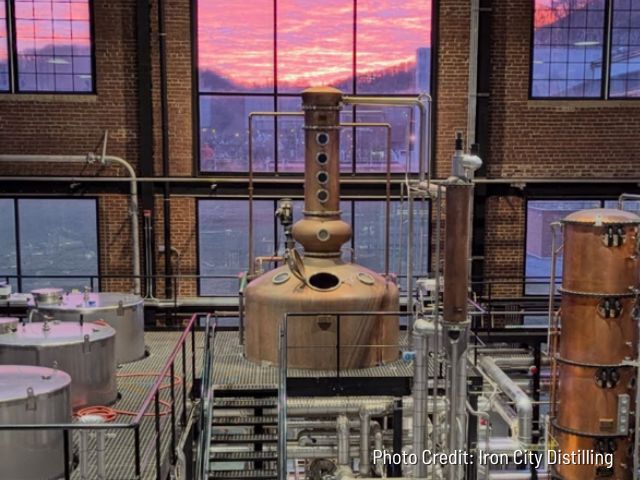
And third, when you head up the spiral staircase to the mezzanine, you'll get an incredible view of the pot Still in three chambers, still with a backdrop, this beautiful hilly area in Pennsylvania. I hope you enjoyed this visit I in city distilling, and it's time to take you along with me to Kentucky where over the next couple of weeks, we're going to check out some of the great new experiences, including one in a town that sometimes isn't top of mind for distillery visits. When people think Kentucky yet, the fertile ground you'll find there under your feet is one of the main reasons for bourbon's massive success. Make sure you got your ticket to ride along by smashing that subscribe button on your favorite podcast app. I'm your travel guide Drew ish. And until next time, cheers and SL of the transcripts and travel information, including maps, distillery planning information and more. At to whiskey lo.com/flights. Whiskey Lord is a production of Travel Fuels Life, LLC.
About Iron City Distilling
Tours available.
Take a Whisky Flight to Iron City Distilling
Map to Distillery
Note: This distillery information is provided “as is” and is intended for initial research only. Be aware, offerings change without notice and distilleries periodically shut down or suspend services. Always use the distillery’s websites to get the most detailed and up-to-date information. Your due diligence will ensure the smoothest experience possible.