
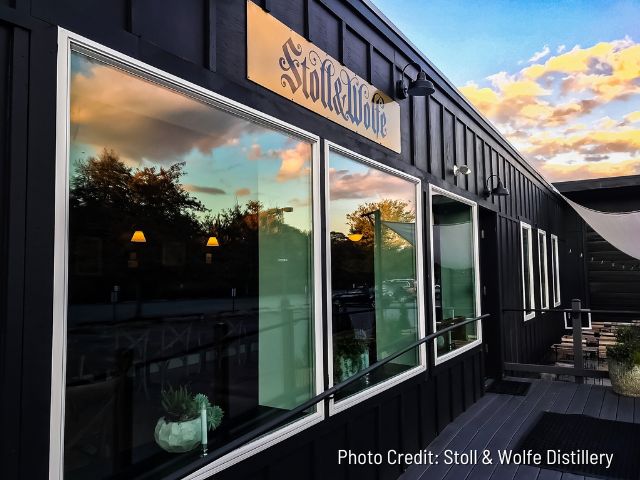
Stoll And Wolfe Distillery
Drew H (00:08):
Welcome to Whiskey Lore's Whiskey Flights Weekly Home for discovering great craft distillery experiences around the globe. I'm your travel guide Drew Hanish, the bestselling author of Experiencing Irish Whiskey and experiencing Kentucky Bourbon. And today we're going to be heading just north of Lancaster, Pennsylvania. In the heart of Amish country, it's a stunningly beautiful area filled with farmhouses fields of hay, tobacco, and corn, and an occasional horse and buggy, which it's always a good idea to keep an eye out for especially when you're cresting a hill. And our destination is the Sto and Wolf Distillery in Lititz, Pennsylvania. Now, you may have thought that I would come to this area by way of the Philadelphia airport, which is about an hour and 45 minutes away, but because I'm planning on crossing the state and heading to an area south of Pittsburgh for my next distillery visit, I thought, why don't I reconstruct my trip so that I avoid the shortest route between the two, the Pennsylvania Turnpike and opt for the longer route?
(01:12):
And you might be saying, well, why would you do that? Well, part of the reason is that since I was a child, I found turnpikes to be immensely boring to ride on. Usually it's about 20 to 30 miles between exits with nothing really in between. And there's an even bigger reason in this case, and it's all about I 76, which is the most expensive turnpike in the country. It'll cost you up to $240 round trip if you took it from end to end. And what I found was that if I flew into Baltimore Washington International Airport, it'd still take me about an hour and 45 minutes to two hours to get to Lancaster, Pennsylvania. And that way I'd get a chance to see real Americana Amish farm country on the way to Lancaster. And then I could take the southern route to my next destination south of Pittsburgh and then return to the Baltimore Washington International Airport without ever having to touch the Pennsylvania turnpike.
(02:10):
And how much more mileage am I adding onto my car for this actually not much at all, and that extra 150 to $200 that I'm going to keep in my pocket because I'm not paying those tolls well, I can use that money to support the craft distillers I'm visiting by buying some bottles of whiskey instead of giving it to some bureaucrat in Harrisburg. And as I drive through the charming countryside and the Amish farms with their green shades. Let's take a moment to get to know a little bit more about this area known as Amish Country. Lancaster County home to a significant Amish population offers a unique blend of rural tranquility and the feel of a culture that's living life much like our ancestors did before mass industrialization with its well tended farms, horse-drawn buggies and covered bridges. The Amish community gives visitors a chance to get a glimpse into their world by visiting local markets and shops.
(03:14):
And in addition to its agricultural charm, the area's famous for its quaint towns with curious names like intercourse and blue ball, each offering its own unique personality for outdoor enthusiasts. The county provides ample opportunities for hiking, biking, and exploring nature preserves. The area is also home to several unique attractions such as the Strasburg Railroad, where you can take a scenic ride on a vintage steam train. The Landis Valley Village and Farm Museum, which offers insights into Pennsylvania, German rural life and animal lovers will enjoy the wolf sanctuary of Pennsylvania with its gray wolves and wolf dogs, where you can get to know the real story of these animals beyond the myths. Whether you're interested in experiencing the Amish way of life, exploring charming towns, embracing animal culture, enjoying Pennsylvania Dutch food or just the natural beauty of the countryside, Lancaster County shines with its own inner beauty.
(04:20):
And just a moment ago, I passed by some intriguing spots that I definitely am interested in investigating later, and I'll let you in on what those places are after we get through our chat with Eric Wolf of the Stolen Wolf Distillery as we drive up Main Street past historic brick and wood facing buildings. All I can think is that this is the epitome of small town America the way it used to be. I don't see any big box stores. There's no fast food restaurants around. It's just local artisans, petite shops, and cozy cafes. As I turn left onto North Cedar Street and look for the sign for Stolen Wolf, I want to give you an idea of why I chose this particular distillery for my visit. I got two words for you. History and Rye whiskey. It wasn't long after I started my whiskey journey a few years ago that the names Dick Stoll and Eric Wolf started crossing my path.
(05:17):
And not long after I went to mixers Fort Nelson Distillery in Louisville, Kentucky, they started talking about the history of that company going all the way back to Pennsylvania with a connection to a distillery called Bomb Burgers in nearby Schaeffer's Town, Pennsylvania, and the Shank family who started that distillery way back in 1753. To put that in perspective, that's not only before the American Revolutionary War, that's during the time of the French and Indian War, but unfortunately it's at that point that the story gets a wee bit fuzzy for me. There's word that there was a Beam family member involved as well as Dick Sto, the co-founder of Sto and Wolf. So I got a lot of questions to ask Eric, but as we sit down for our conversation, I first wanted to kick things off by finding out how Eric and his wife Aviana met Dick Stoll and how they found themselves owning a distillery.
Eric W (06:12):
For us, owning a distillery is a classic case of being too dumb to know when to quit and sort of following passions and rabbit holes for us visiting Lancaster County, my wife and I just had our daughter and really just thinking about how we could get back to the type of childhood I had and raising our daughter here in Lancaster County, Pennsylvania. And my wife very astutely pointed out, there was nothing I could do outside of marketing and working in restaurants. So what was I going to do to move home As we're having this discussion, driving back to New York where we were living, we were quite literally passing Distillery road where Makers used to be At that time we were really involved in local food and regional food traditions and started discussing the fact that that was such an amazing local tradition and history and the fact that very few people, including us knew very much about it.
(07:09):
So it was sort of the classic case of not knowing what we didn't know and then beginning just to pull it a thread and our whole universe unraveling and leading us to that point. We were ultimately introduced to Dick Stoll, the last master distiller at what was the mixers distillery in Chafers Town. We were introduced to Dick and his wife Elaine by a local historian Ethan Smith. And the rest is definitely history. But when Dick and I had the chance to meet for the first time, he later admitted he was like, well, they told us someone was interested in starting a local distillery and we had to meet them. What we didn't expect was you to show up with bottles that you had liked, historic bottles that you liked for inspiration, samples of some things that you were working on at home. And really just kind of a, to me it was just meeting someone I read so much about and was so excited to meet that. Thankfully he wasn't overwhelmed by all of our enthusiasm and was crazy enough to come along on the ride. But for us just getting to meet Dick Stoll and speaking with him and pulling back those layers of history and realizing that he was the last living connection to really three centuries of local whiskey production. And from there it really just became a mission of preservation and love.
Drew H (08:41):
It's fun to think that you started out with a distillery based on your interest in the history, and then you have somebody who has basically lived that history. So let's get into Dick Stoll first and talk about how did he get into distilling and a little bit about maybe what he was making when he was working at Mixers back then.
Eric W (09:06):
Sure. Well, it was funny, I once asked Dick, I was like, how did you set out to become involved in distilling? And Dick was nothing if not incredibly honest, and he said, I never had any intention of getting involved in distilling. He grew up locally in Lebanon County, joined the military in the Korean War, as many patriotic folks did, and he ended up working on the forerunner of jets essentially in the Navy and came out and so many soldiers returning after the Korean War again, working on the forerunner of jets. This is like the cutting edge technology of the world at the time. And again, with so many folks returning looking for work, he went to the local unemployment office and ended up getting assigned to dig a ditch. And everything Dick did, he did with the same amount of effort and commitment. So a few weeks after they started digging it, they asked him, they were like, you're one of the few people that shows up on time, works really hard, do you want to work at the site that we're reopening?
(10:16):
It's actually a distillery. And so Dick quite literally worked at the distillery from the ground up and worked his way through barrel warehouse maintenance and ultimately he was tapped by Charlie Beam to learn how to distill. Unfortunately, when Charlie had to go back to Kentucky, Dick ended up being tapped as master distiller. And in true, Dick stole fashion, was the head of maintenance and master distiller and truly was worried that he was neglecting his maintenance duties and attempted to resign as master distiller so he could focus on the maintenance just because any distiller will tell you there's a lot of maintenance in a distillery, especially a big distillery, and if things aren't working properly, you're not making a drop of whiskey. So they very nicely told Dick that that was okay. They'd find someone else to be head of maintenance, that his skills were better utilized, distilling.
(11:15):
So with Dick, it was amazing. He was just so incredibly humble and I think for him, one of the biggest things that he had trouble truly understanding was that anyone wanted to meet the person who had made their whiskey. And I think for Dick, it was the kind of thing where when he was making whiskey, they were producing, I believe it was 60 barrels a day at mixers at the height For him, it was a production facility and he took that very seriously, whether they would've been making food products or widgets, Dick was incredibly committed and there was a way to do things and that was the right way. That said, for him so much of that process was so artistic and artisanal, and I think he saw it as being the product of many hands and that the master distiller wasn't necessarily the single person responsible for that and also was just incredibly humble about the way he approached everything that said when he was working at mixers, they were producing a lot of rye whiskey.
(12:27):
They also actually produced bourbon. Interestingly enough, some of that bourbon would go on to be a H Hirsch, which after the distillery closed and that was bottled and released, went on to be the first five star bourbon in the international Spirits competition with Paul Paco. And was really almost the first time that American wine was held up on par with French wine just in the world of whiskey. So I think for Pennsylvania to have one of the most award-winning bourbons ever produced is fantastic. A nice bit of trivia. But it's interesting, we still get folks that come into the distillery once a week and tell us that what we make can't possibly be bourbon because it's not in Kentucky. So with that, we very politely, depending on how convinced they are of their truth, we discuss it with them and sometimes just sort of allow them to go on thinking that because we'll never convince them otherwise.
(13:28):
But in general, the main sort of overarching process that Dick was working with was a sweet mash rye while he was there, which very Pennsylvanian. And then also to my mind, very Eastern Pennsylvanian was a 60% rye, 30% corn, 10%, I'm sorry, excuse me. The percentages were 5% the other way, excuse me. So it was 55, 35 10, excuse me. So when Dick came to Soto Wolf and had the opportunity to sort of create his own mash bill, he went closer to what they used to make for a Sam Thompson Rye. So ours is 60, 30, 10, a little bit more expensive with that extra rye. But that's definitely one thing about eastern pa rye with the sweet mash process, certainly not the cheapest way to make rye, certainly not the most efficient way to make rye, but just historically a very flavorful process and something that's very, very historic to our area.
Drew H (14:38):
I like that you brought up the relationship with the beam family and then bourbon because now the mixers brand is off in Kentucky, so it's kind of funny to see and that there's a beam that's been distilling for them as well there. But that it would make sense that if you're going to have a beam working at your distillery, you're probably going to produce a bourbon even if it's in Pennsylvania.
Eric W (15:07):
It's so interesting. And Charlie being really knew quite a bit about bourbon being a bean, but his specialty in a lot of ways was really rye and a bunch of the distilleries that he had the opportunity to work with were in the north from Wisconsin to Pennsylvania. And I think for a lot of folks in the modern whiskey world, it's kind of hard to understand the standing of rye prior to prohibition and even for some folks in the fifties and sixties where rye for them just was a very sophisticated drink. And I think for a lot of folks in their old fashions and in their Manhattans, that was sort of their go-to spirit for it. But again, so interesting in the way that the consumer trends can shift over time. We even see now and so much of consumer demand is conditioning and what folks have grown up enjoying or what they first enjoyed with an older generation that turned them onto it.
(16:12):
And rye tends to be spicier than bourbon. So when we're doing tasting flights at the distillery, it's fascinating to watch folks recognize that difference. And to some folks, it's the thing that makes it the spirit. They prefer more than bourbon to other folks. It's the reason they prefer bourbon over rye. The most interesting thing. And because rye is still in its nascency where you have folks that will try our rye and love it or hate it, we tell them all the time, it's only representative of one style of rye. And for the listeners out there, I'm sure many of them know, but to be a rye, it only has to be 51% or more rye. So that other 49% is a lot of variability and theoretically 2% difference could shift something from a bourbon to a rye. So it's very interesting with folks to see their journey in rye and also to, it's a lot of fun to be part of that where whether we're the first rye they've tried or somewhere in the middle of their journey just to see how they respond to a sweet mash rye that has a mash bill similar to ours.
(17:27):
And then also one of the unique things about what we're doing is we are using a column still with a pot still thumper. So for us, it's very a lot of fun to talk to people about the column still and the column distillation process where there's a lot of misconceptions sort of surrounding pot still. And for some, I'm sorry, misconceptions surrounding column sales rather. Excuse me.
(17:58):
And I think for a lot of folks what we try and refer to is it's very similar in our mind to when Bob Dylan went electric. It's not that he was necessarily betraying the music. You can use many guitars to make many different sounds. It's more the artist that's using the instrument that creates that. So for us, one of the things that we enjoy doing a lot is sort of taking away some of the misconceptions of column distillation. I know earlier you and I were talking about Alan Bishop, who is a great friend and colleague and collaborator, and one of the things that Alan and I started discussing when we had the opportunity to work with Steve Bay or down at Mount Vernon was just that, whether it's at Allen's Distillery, whether it's at Mount Vernon or our distillery at Stolen Wolf, different equipment at all three Allen's set up is much more similar to Mount Vernon, but all three of us are coming off at the same stripping proof, relatively all three of us are coming off at the same finished roof relatively.
(19:04):
So it's just so fascinating to see the way that vapor path equipment, sizing of equipment, location of the distillery all plays such a role, but truly the person running that still in their sort of ethos in running it is really shows itself ultimately in the product. So it is a lot of fun to be able to show folks the versatility of the column still and also in some ways remind them that while it can be used to strip out all flavor in the right hands, you can really create a very nuanced whiskey with it as well.
Drew H (19:41):
Yeah, there's a lot of history tied to your distillery when we start talking about the name bomb burgers and then we also talk about your farm. I mean, these are both things that head back into the 18th century. Do you feel like that kind of drives you into a world where you need to focus on history, that that needs to be one of the core things that drives the personality of stolen wolf?
Eric W (20:08):
It really is. And for us, we always say and co-opting the quote that if we've seen further, it's by standing on the shoulders of Giant. So for us, the legacy of someone like Dick Stoll, the legacy of all the distillers that unfortunately have been lost to history in the last 300 years for us, our relatives, where we still have cousins that are farming land that was granted to our family by the pens in 1741. So so much of distilling is discipline when no one else is watching. You can certainly cut corners when no one's in the distillery and it will affect the final product and over time it will affect the reputation of the distillery, but no one's going to see you doing it. So for us, we talk quite a bit about that. Not only are we making whiskey for modern consumers, but there's a lot of eyes watching us from the past.
(21:07):
And for us it's one of those things where, again, speaking of relatives that dared to cross the Atlantic with nothing and we're fortunate enough to be granted land and worked so hard to clear that land with backbreaking labor and we're just fortunate enough to get the crops in for us, it seems like we've got sort of the easy part of it now. And not that it's not incredibly hard work, but for us there's sort of that sick thrill of the discipline and knowing that no one is watching. But again, historically we've got generations that are depending on us for that legacy. And I think for us that's something we definitely take very seriously and something that we always joke, we don't want to be the folks that squander that legacy. We want that legacy to continue for many more generations. So trying so hard now to build that legacy and continue that for the future, not that it's a wait, but it's in some ways an obligation and a very positive obligation, but something that we really do take seriously.
(22:15):
And unfortunately Dick passed away, it'll be four years in August, but again, after his 45 years in the industry and time just spent working, I mean he literally gave blood, sweat and tears was missing part of his finger from a barrel loading machine that for us, it seems like it's only fair to work at least as hard as they did in building that history. And again, with local whiskey production history, going back to 1753 National Register of Historic Places, San Shanks, which ultimately became bomb burgers, first people to hang out a shingle and say that year round, this is what we do distill. So again, for us just to have the good fortune to be born into an area where there is so much whiskey history, to have be the eighth generation of folks that were so diligent in farming, it seems like for us that man, we're just so blessed to even have the opportunity to work hard at. That's something we love so much.
Drew H (23:26):
Well, one of the ways you can bring back historic flavor is to bring back a historic grain and Rosen Rye is something that you guys have focused on. What was the reason for the choice of going with Rosen Rye and is that something you're growing on the farm?
Eric W (23:43):
We are growing Rosen on the farm and with the Rosen journey that all started on Laura Fields and Dick Stoll and Penn State University. It started with five ounces of grain, basically a handful of Rosen, and that was all the brainchild of Dick and Laura just speaking about mixers used to make jugs of their whiskey and decanters. And on the back it had just talked about the Rosen Rye and how special it was to the whiskey that was being produced and the history. So Dick was actually the last person to distill Rosen. It was about 50 years prior to when we started doing. And so with that just truly an honor to be there with Dick Distilling Rosen for the first time in 50 years. And then as we've discussed before, that moment of the whiskey first coming off the still and handing Dick a sample to try.
(24:46):
I know it was only a split second, but it felt like years of my life going by waiting to see. So just very thankful that we've been as blessed as we have with the Rosen. Anytime you sort of reintroduce a new crop, it's definitely a big risk for the distiller and the farmer as well. Thankfully for us, we've increased our production from one acre to two and then we will actually be growing five acres next year for the first time. So for us it's been really been a labor of love, but also just trying to learn with such limited resources available. The first year that we had Rosen on the Kline farm, working with Laura and trying to see the growth stages essentially, so we had the fe stages, so there are these black and white sort of drawings of the grain and it's a side view and you're trying to see where in the growing process it is to apply some growth inhibitor and maybe a little antifungal.
(25:55):
And the problem is that those pictures are of wheat because they don't actually have them of Rosen rye because no one had grown it. And then after that you're looking at stuff and somebody forgot to tell the field what it was supposed to look like or that it was all supposed to look like the same thing at the same time, because you have southern exposure that's doing different things than northern exposure, certain parts of the field with more drainage than others. So it is really been so fascinating to learn more about the grain in the field and its personality as it grows in addition to its personality in fermentor, well in the mash ton fermentors, and then the still as well.
Drew H (26:38):
So when somebody's coming to the distillery, is there an opportunity to taste what Rosen Rye tastes like?
Eric W (26:46):
There is. What we like to do is we try to have folks taste both aged and unaged Rosen. For us, a lot of the thought process behind that is a lot of folks know what the barrel contributes or they have some idea what the barrel contributes, mostly because they've had a lot of aged whiskey. Most folks have not had the opportunity to try a white whiskey off the still. And if they have, they certainly haven't had the opportunity to try a Rosen rye. Some folks have tried rye off the still, but for them to be able to see what that initial flavor profile is like when it first emerges versus what it tastes like after it ages out in the barrel, really will give you an idea of not only what the Roses and grain itself is contributing, but also how that matures in the barrel and the interplay of the tannins and the aging and really what that process looks like. And for us, we're still learning ourselves in that. The oldest Rosen we've released to date has been, I believe, four years. But it'll be really interesting to see over time how that ages out and with longer aged expressions as well.
Drew H (28:03):
So are you doing tours? I noticed that you took a little break in the summertime. When do you usually run your tours?
Eric W (28:10):
So we do tours every Saturday throughout the year, with the exception of mid-July through August. Turns out that a lot of folks don't enjoy 90 plus degree tours, and our back is climate influenced, but not climate controlled. Slight difference in the wording, but a major difference in temperature. So for us, we actually are very similar to the way Dick produced where we actually shut down for 10 weeks throughout the summer for production, which is more than enough time. We have more than enough maintenance to catch up on during that time, but for us, it just gets so hot that without the climate control, it's very difficult to produce.
Drew H (28:56):
Well, I appreciate you Eric, taking the time. We can talk and talk and talk and talk. We talk quite a bit actually before we hit the record button. So I will love having you back on as a guest sometime in the future on the interviews podcast. But thank you so much for joining us and I can't wait to get out there and actually check things out for myself. Oh,
Eric W (29:19):
Thank you for the opportunity to be on and talk whiskey. Always a pleasure.
Drew H (29:23):
Well, I hope you enjoyed this virtual flight to the Stolen Wolf Distillery. If I peak your interest in traveling to the distillery, make sure to head to whiskey lord.com/flights where you can view the profile of the Stolen Wolf Distillery and also see a growing list of worldwide distilleries that we're featuring on the show. And you'll also note that I've added in a wide range of Pennsylvania distilleries for you. Now plan out if you find some you're interested in, you can use the heart feature to show your interest and that'll let other people know you're interested as well. Or log in with a free membership, bookmark your favorite distilleries to add them to your very own wishlist. The website features, planning tools, maps, tour dates, and booking links for over 300 distilleries worldwide. Start your journey@whiskeylord.com slash flights. Stay tuned because in just a moment, I'm going to have some closing travel tips if you're planning on visiting the Stolen Wolf Distillery. But first, it's time for this week in Whiskey lore.
(30:26):
It was 110 years ago this week that the Paris News in Bourbon County, Kentucky announced the final chapter in the winding up of the distillery business in this county. The article went on to say that the GG White distillery maker of the Chicken Cock brand had shipped its last barrel of wet goods to Louisville and was laying off its warehouse staff purchased by the Kentucky Distillers and Warehouse Company in 1899 of Heart of the Whiskey Trust. The Bourbon County Distillery was eventually seen as redundant as the trust sought to consolidate its holdings. Two years earlier, the white distillery had shipped its distilling equipment off to EJ Curly distillery at Camp Nelson, and all that remained in Paris was a supply of previously distilled spirits, and those spirits had run dry. The building was sold to Charles s Brent, who converted it into a bluegrass seed cleaning business, and to make sure that they wouldn't see any future competition from the facility. The trust put a condition in the deed of transfer where no alcohol was to be produced on the premises in the future for Bourbon County. It was the end of an era began either with or just before Jacob Spears established a distillery north of Paris in 1790, and it would be another century before distilling would return to the county with Hartfield and Company.
(31:54):
Well, as we prepare to leave the Stone Wolf distillery and make our way to our next distillery destination. I've got a couple of additional attractions you might want to check out near and around the town of Lititz. One. As we retrace our steps is the Wilbur Chocolate Factory, a historic chocolate maker offering delicious treats and a glimpse into the art of chocolate making. Another nearby gem is the oldest pretzel bakery in America, Julius Sturgis Pretzel Bakery, where you can learn the art of pretzel, twisting, and enjoy some freshly baked treats. And another nearby jam is the Lancaster Central Market, one of the oldest continuously operating farmer's markets in the country, offering a fresh variety of produce, meats and artisanal goods. As we close out our trip to Stolen Wolf Distillery, if you're still on the fence and need a little more cajoling, well, let me give you my three reasons why you should have this distillery on your whiskey lore wishlist.
(32:53):
Well, first is the chance to get a firsthand accounting of the history of stolen wolf bomb burgers, the Shank family, and the connection to mixers. Second would be Eric himself. Eric is a highly respected, passionate member of the whiskey community. You can learn a lot from him. And I put him up there with people like Steve Bayshore, Mount Vernon, Alan Bishop, formerly of Spirits of French Lick, and Laura Fields, who is doing some amazing work finding historic grains like Rosen Rye. And third is a chance to sample that Rosen Rye in both new make and in a finished product. It's a great way to get an insight into what barrels do to a spirit. Well, I hope you enjoyed today's episode. It's time to jump back into the rental and make our way towards Harrisburg before we head South Dip into Maryland, and then up to Washington, Pennsylvania where we're about to explore Liberty Poll Spirits, a place where we're going to dive into the history of the Whiskey rebellion and some of their unique styles of whiskey, including a peed bourbon. Of course, we're going to get plenty of history around the Managa healer rye as well. In fact, we might even learn how to pronounce it. Make sure you're subscribed to the Whiskey Lo podcast so you don't miss any of the great whiskey flights to come. I'm your travel guide Drew ish. And until we meet again, cheers and Slava for transcripts and travel information, including maps, distillery planning information and more. At to whiskey lore.com/flights. Whiskey lore is a production of Travel Fuels Life, LLC.
About Stoll And Wolfe Distillery
Tours available.
Take a Whisky Flight to Stoll And Wolfe Distillery
Map to Distillery
Note: This distillery information is provided “as is” and is intended for initial research only. Be aware, offerings change without notice and distilleries periodically shut down or suspend services. Always use the distillery’s websites to get the most detailed and up-to-date information. Your due diligence will ensure the smoothest experience possible.