
Sugar House Distillery
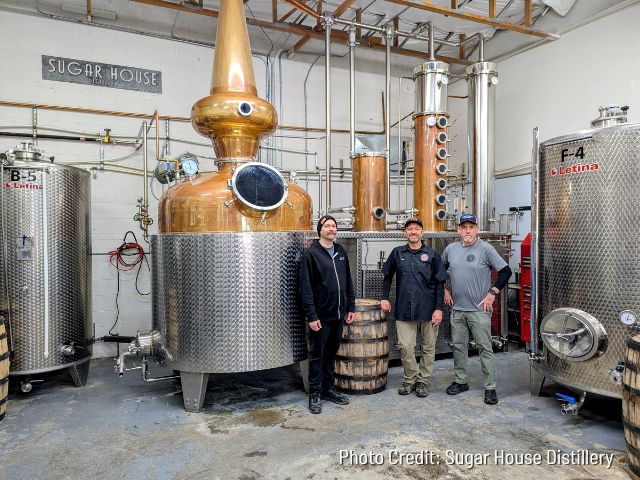
Drew H (00:00:08):
Welcome to Whiskey Lord's Whiskey Flights. You're weekly known for discovering great crab distillery experiences around the globe. I'm your travel guide Drew Hanish, the bestselling author of Whiskey Lord's Travel Guide to Experiencing Kentucky Bourbon, the Lost History of Tennessee Whiskey, and the book that bust 24 of Whiskey's, biggest myths Whiskey lore, volume one and this great 48 tour has been amazing so far. It's just getting started, 4,000 miles to go on this journey. And as I left above so below in Santa Fe, I got the chance to see a friend of mine, Israel from the Whiskey one channel on YouTube, and he introduced me to some great whiskeys. We sipped on some westward whiskey, and I got to say, now that I've had westward officially, I am rooting even more for those guys to survive their financial difficulties because that stuff was amazing. Got to try dark arts for the first time, which was fantastic.
(00:01:07):
And that is a blending house in Kentucky that moved into the old Artie one spirit spot at the Lexington Distillery District and got to taste some amazing scotches as well, I would expect no less. Heading over to my friend Israel's house. Then I caught 40 wings, got back into the car the next morning and had a long drive across not only New Mexico, but also into Utah heading for Salt Lake City. It's about a 10 hour drive, and so I decided to do eight hours of it on the Sunday where I'd have time to really soak in the scenery along the way. I had this question while I was on this trip of what is your favorite state to travel in and hands down, easiest answer I can give you is Utah. Utah is one of the most incredibly beautiful scenic states, if not the most beautiful, and it's because of the different terrains that you go through.
(00:02:12):
And this is my third trip through, on my first trip through, I drove down from Arches National Park and then I drove down to Monument Valley and I bumped into this beautiful spot, which is off the beaten path. I don't know why I decided to go this way, but I went down State Road 2 61 and you're just driving through cattle country basically, and then all of a sudden you come up on this sign that says, slow down, I've been doing like 70, and it says 15 mile an hour speed limit gravel ahead. I'm like, what is this? Well, you end up at what's called the Moy Dugway, and this is a twisting, turning dirt road that goes down the side of a cliff and it's 15 miles an hour all the way down this thing. There are barriers. There are barriers that look like they've disappeared.
(00:03:05):
There's no guard rails for most of this. It's kind of a harrowing adventure, but the view is incredible because you're looking over this area called the Valley of the Gods, Mexican Hat Rock is there. Monument Valley, if you saw Forrest Gump and the place where he stops his little running across the country, it's a John Ford film, basically just absolutely incredible scenery. And so this time I wanted to take that drive again, but I was coming north, so it's not quite as impressive coming north. It's just kind of the harrowing drive and you don't get a chance to really look out and see the scenery. You're looking more at the mountain itself, the cliff side. And then got to the top of that. The next time that I went to Utah, I actually took this incredible drive where I went from Bryce Canyon, which is something you got to see at least once in your lifetime across State Road 12.
(00:04:08):
And that takes you through the Grand Staircase, Escalante National Monument, and then Capitol Reef is there, and then you go driving down. And I was doing this near sunset driving through a town called Height, which is where they filmed the movie Maverick, and I wanted to see that again on this particular drive. So that's the way that I drove up. And I have to tell you this is to describe this, especially at Sunset. It was insanely beautiful at Sunset, but even in the middle of the day driving through here, the best way I can describe it is it's like driving through mountains that look like Rocky Road ice cream with almond shavings on the sides. It's just absolutely incredible. And then you're driving up along where the Colorado River is and it's a stunning drive. What I will say is that it's good to probably take a little catnap somewhere along the line and there's not a lot of places to do that, but I just pulled over to the side of the road and took a little catnap.
(00:05:15):
It is a lot of driving with no gas stations, no services, make sure you're gassed up before you go driving through this beautiful drive, but it is well worth doing it. And then after that, I found myself a hotel north of Green River and I 70 on the way up to Salt Lake City. Not the best hotel I've ever stayed in, but there's not a lot of choices. Again, hotels, gas stations, they are rare along these drives through Utah. And then the next morning I got up and I had plenty of time to get to Salt Lake City and the two distilleries I was heading to, I was going to Outlaw Distillery to at least visit with Connor, their distiller. And then I was heading up to Sugar House to meet James Fowler, who I'll be interviewing here in just a moment. But I wanted to tell you that it was funny because as I was driving through there again, beautiful mountain scenery that you drive through, I thought I had plenty of time.
(00:06:15):
I was going to get there probably about an hour early, and then all of a sudden I had to stop and I'm like, why are we stopping? There's a policeman up ahead and he has blocked the road. Well, I looked to the side and there's cattle walking along the side of the road. So for 35 minutes I had to sit there with the motor off and just wait for the cattle to be taken across the highway. So this is what happens when you're driving out West. It's kind of reminding me of my drives through Ireland and Scotland where you might get a blockage of sheep going across the road. Well, cattle happening here, but I got up to Sandy, Utah, which is south of Salt Lake City and had a great meeting with Connor of Outlaw. We're going to have outlaw on eventually when I get to Arizona.
(00:07:07):
I drove through the corner of Arizona, but I didn't get a chance to go to any distilleries there. And so that'll be coming up as a part of the great 48. After I left there, I made my way up to Salt Lake City and unfortunately, I had a rock come up off of a truck tire and smack the rental cards windshield. And so I had to look at a crack in the windshield for the rest of my drive. Something else you have to deal with when you're driving out west and you're doing 80 miles an hour down the freeway. But I got the sugar House on time and James walked me around the distillery. They were sending a bunch of ready to drink cocktails out the door, and so he kind of walked me around as they were moving these big pallets of drinks out the door, a somewhat cramped space in there. It's in an office park, same as Outlaw was. And then we walked into the barrel house and we sat down and James had a little cart that was filled with all sorts of whiskeys. So we're going to go through and taste some of those whiskeys here during our conversation, but I wanted to start out first by getting a little bit into James's background. James, you actually start out in brewing, so talk a little bit about the evolution from brewing beer into distilling.
James F (00:08:32):
I mean, I started home brewing in 1990. It was bizarre. I mean, just back then we had a home brew store here in Salt Lake called the Beer Nut, and I'd go in and talk to Jay and just be like, Hey, Jay, how do I upsize this? I want to do more than five gallons. I don't want to be doing it in a bucket. And he started talking to me about dairy equipment and stuff like that, and I just started looking, but we had little five gallon kegs and we were bottling kegging kind of on a pretty good scale of the home brew. We had a publication in Colorado, I'm trying to remember, I think it's Mountain Brews. They were doing a home brew contest, and they called Jay and just said, Hey, would you send over some beer from some of the people that come into your store quite a bit? And I won Home Brewer the month or something like that. Then a couple years, it was Home Brewer of the year, but going back to those styles just probably weren't anything like they were today. I mean, everything was pretty simple and you beer your Hef five, but just kind of where beer's at today.
(00:09:39):
But really it was probably when I hit my mid thirties and I was running marathons monthly and I just couldn't, could not drink beer like I used to. And it was hard to come home, drink seven or eight beers and get up at five o'clock in the morning and then just your stomach and everything. And we'd moved down to Dallas, Texas, and I started discovering good whiskey again. And I just like ever, most people, I think I got drunk off some crappy whiskey when I was younger, but I started to realize, wow, you don't have to shoot this. You can actually just sit and enjoy this. And it really started making me think like, Hey, I understand fermentation. I just need to figure out distillation and just to get a little home still and stuff like that. And just started distilling stuff just on the side and even opening the company, I think I realized I got plenty of fermentation understanding, but I still want somebody with that distillation understanding. And that was a huge key of bringing in Eric Robinson into the company.
Drew H (00:10:46):
And Eric came
James F (00:10:47):
From, Eric came from a distillery up in Park City.
Drew H (00:10:50):
Okay, a
James F (00:10:52):
Neighbor. Yeah,
Drew H (00:10:52):
A neighbor.
James F (00:10:53):
A neighbor.
Drew H (00:10:56):
Kind of taking a step back, was there a whiskey that stood out to you that kind of made you go,
James F (00:11:02):
Whoa. Yeah, I would say that was price.
Drew H (00:11:06):
Was it? Okay. Yeah,
James F (00:11:06):
I would American single Malt, and I don't think at the time they really marketed that way. It was just kind of that Colorado whiskey, and they didn't push that hole that it's an American single malt or that malted barley. Obviously when you do the tour, you read the bottle, you could figure it out, but I don't think the marketing was pushed that way. But Colorado, once again, I was still living down in Texas, but Utah, we grow a ton of barley. That's what we do in northern Utah. Budweiser and Modelo are headquartered on their malting mills just up in Idaho Falls just 150 miles from here, 125 miles. And so that was a big push. It was just like, I'd love to do American Single Malt do something similar to that.
Drew H (00:11:57):
Yeah. Is that where you started then when you It is.
James F (00:12:00):
Okay. Yeah. I think that was actually a bad decision because everybody drinks bourbon and to be like, Hey, come try this whiskey. And then to have it be something that they weren't educated on before, we were just educating everybody. I mean, it was just a lot like, well wait, there's not corn in this. This is 90% two row, 5% honey malt, 5% Vienna malt. And so yes, it is going to taste different. It's not going to be your typical bourbon. And so going back on it, I think I probably should have done a bourbon first and then released the American Single Malt after. But we're here.
Drew H (00:12:45):
You got to go with what your passion is, and part of it is getting to tell that story and let people discover too. The first time I had str of hands was impressed, but I remember I wasn't overly educated about whiskey at that time. This was probably around 2018 when I was first just starting to order whiskey, and I looked at the label and it said Colorado on it. I know,
Drew H (00:13:13):
But
Drew H (00:13:14):
If I saw Signal Malt, it didn't register in my mind, so I just walked away with it thinking it's whiskey. And I almost wonder if by what you're saying now, that might've been somewhat of a strategy because people know what bourbon is, people know what whiskey is. Do they know what single malt is?
James F (00:13:31):
Yeah. Well, I think that that was confusing back then that people would be like, so is it scotch? And so if you couldn't have a conversation with them, I think it was really hard for them to understand what it was. Yeah, I love our American single malt today. I would say that probably everybody here, it's probably their favorite whiskey that we make. And it is interesting. We probably sell three to one, maybe even. I bet we sell five to one on our bourbon. So for every five bottles of bourbon, we sell one bottle of American single malt. But you get somebody to come in here and do a tasting
Drew H (00:14:12):
And
James F (00:14:12):
You get them to taste rye whiskey, we hear tum, I am not a fan of rye whiskey at all. They leave with a bottle of rye whiskey. They taste the malt, they leave with a bottle of the malt. And it's just so different once that you can get 'em and talk to 'em about it and then have 'em try it and just to see how it's like, oh, I really like that.
Drew H (00:14:35):
So when did the distillery get
James F (00:14:38):
Started? So we were permitted in 2013, just the way that the state of Utah works. We couldn't operate our still till January 1st, 2014. And so we turned the still on. I mean, I want to say we turned it on New Year's Day, but we started with vodka just to bring money in, and I would say 2014, maybe August or September, we started doing our whiskey runs, but we did vodka for a good eight months in those early days. So we were the third distillery in the state to open up High Wests was first Ogden Zone, and it's a little thing between us and Beehive. We were both permitted the exact same meeting, so they're like, Hey, we're third. But I'm like, Hey, we were before you guys in the meeting, so technically we're third. So kind of a fun joke between Beehive and
Drew H (00:15:42):
Myself. And they're right down the road from, yeah, they're right across the street, so you can come visit both of them while you're in town. So as few distilleries as there are, and I think back to Colorado, it almost makes sense that they started making whiskey there because there were so many breweries and they already had the grain supply all set up. But you're coming to Utah, which is not a traditionally alcohol drinking area. And so how did you go about getting connected with farms, doing grained glass? So I'm assuming your grain is coming from of pretty close proximity.
James F (00:16:20):
So I was born and raised here, and I had moved to Texas, but that was one thing. Utah has amazing water. We have amazing crops. We're not the Midwest with corn and stuff like that, but the barley was a big draw that we had talked about. And there was just something about, it was funny because when I was in some of those distilleries in Texas, they would just be like, oh, James, you're not going to be a threat because you're going back to Utah to start a distillery. I remember somebody saying that to me in Kentucky, a couple of the bigger distilleries. It was just like, Hey, look, you're opening a distillery in Utah. I'll teach you everything I know because you're going to need
Speaker 4 (00:17:03):
It.
James F (00:17:04):
You're selling snow to Eskimos. But a lot of that was just because I wanted to use a lot of the local ingredients and I wanted to come back up here for my family. We tried to open the distillery down just out of Dallas, and believe it or not, it was really, back in those days, it was impossible. Texas wanted us to sell out of state for a year before they would let us sell. Wow. And I think that if we would've just weathered through another six months, it would've changed.
Speaker 4 (00:17:36):
But
James F (00:17:37):
The bank was, I mean the bank, the city was totally behind it, but just getting the license and it was like, you know what? Let's just go back home. Let's go back to Salt Lake and open the distillery.
Drew H (00:17:49):
It would've been a very different whiskey from what you're making here.
James F (00:17:52):
It would've been 100% different. It really would've. And I mean, as I was talking before, the terroir of what's going on here with the climate, the soil, the weather patterns, everything about it, it would've been a different
Drew H (00:18:06):
Whiskey when we were walking around the warehouse. We got into interesting discussion about the types of grains that you're using and the idea that you're using blue corn. Is it the same strain of blue corn as being used by say, Balcones and how different the flavor is just because the soil composition in Texas or wherever they're getting that grain from, and you getting it grown in Utah
James F (00:18:36):
Where we're getting it from? No,
Drew H (00:18:38):
Exactly. Yeah. So I mean, have you tried to figure out what maybe the taste of Utah is with particular grains?
James F (00:18:50):
No, absolutely. But I mean, I think the fun of it, I mean, just even getting Balcon the baby blue or the blue corn and tasting it up. We just had some blue corn whiskey from a distillery out of Tempe, I believe. But it was really kind of fun to see, hey, ours are hitting all these taste flavors right here, but it differs right here. It's a little bit different on the sweetness and these other properties and stuff like that. So it's really, really neat to see that
Drew H (00:19:21):
You decided to go with on grain distilling. Yes. So what was the idea behind that, and did you have an example of another distillery that was doing it maybe that prompted you to go that
James F (00:19:35):
Direction? Yeah, I mean, that is an interesting thing. Going back to the Colorado distillery, we did try some American single malts that were off grain, and we got some from St. George. We got some from down in San Diego, so we got other peoples that were doing on grain, and it was just like, I like the flavor, I like the viscosity that mouth fill. I just think that it is beautiful whiskey at that point. Then also just looking at on grain versus off grain of just the yield and are you going to put the equipment in for both? And that's a hard thing. We want to do a bourbon, so it's like, are we going to have a different mash ton just to do the American single malt? And it was just like we're doing on
Drew H (00:20:32):
Grain. Yeah. The one spirit that I would wonder what it's like on grain is the American single malt, because the idea that in Scotland, they're mostly distilling off grain. I think I've heard of a distillery there that is doing on grain, but it's an interesting grain and the idea that it's going to get probably a boost of flavor impact from that grain. What kind of notes do you think it's kind of bringing to it besides the oiliness? Does it give you more of a grainy kind of a
James F (00:21:06):
I think it does, yeah, definitely. Here in a minute we'll try it, but there's more to it than that too. I felt like kind of going back with a definition, and this is just me. I mean, probably some other people would fully disagree, but American single malt, well, let's make this in the eyes of a bourbon maker. How do we make bourbon? It's on grain. What do we do in America? Most, not all, but most whiskey is going to be made on grain, so let's keep that doing it the way that we make whiskey in America. And that was also a big point of mine. Let's not try to do it. They do it in Europe. Let's do it the same way.
Drew H (00:21:54):
But you took a left turn going with the pot still because,
James F (00:21:57):
But we still do run through calm.
Drew H (00:21:59):
Oh, do you? Okay. Yeah.
James F (00:22:00):
So we send it through a couple plates on that and clean it up.
Drew H (00:22:06):
Okay. So it goes through the pot still first and then it finishes through the
James F (00:22:10):
Yep. So we'll do a stripping run on it, and then we'll do a finishing column run on it.
Drew H (00:22:15):
Okay. With that oily whiskey, you find you're taking your cuts a little less deep maybe? Or are you going, I mean, I'm sure there's a certain level of oiliness, it could probably get to be a little too much. Yeah,
James F (00:22:28):
No, I mean on the American single malt and the bourbon there, I mean, it's about the same when we make that cut. But going back to where we distill, I feel like we make our cuts a lot earlier than most distilleries. So I think that a lot of distilleries are my friends, and where they cut at versus where we cut at are two totally different stories. I find that kind of interesting about people and pot stills, how they're always so intrigued about pot still whiskey, but I think sometimes when they taste it and it is a little more, it's got a lot more of those oils and stuff in it that they're like, oh, this isn't good. And I think that when you clean that whiskey up a lot better or a lot more, I think that you hear a lot of this is really clean. This is really good. And then to be honest with you too, with the way that we started out in a 15 gallon size barrel that had a lot of effect on those 15 gallon size barrels. We don't have that problem today because obviously we're going into thirties and 50 threes, but it was much more affected by a little 15 gallon size barrel. We're not cleaning it up. It didn't go through seven or eight summers and winter cycles in the barrel. It could go through one year.
Drew H (00:23:57):
And
James F (00:23:57):
So to have time with that wood and to have time with that charcoal of cleaning it up, it was a whole nother story. And so it really needed to be cleaned up at the still.
Drew H (00:24:06):
That's really an interesting point because the idea of how long you can age, and now you're dealing also with more heat, you said you lose about 14 to 18% of the whiskey in there, so you can't leave it in there for seven, eight years. You're not going to have a whole lot left, and it's probably going to taste very oaky, but you also need, those oils tend to break down over time and create those interesting flavors. So when you get much more of a speed distilling,
James F (00:24:38):
Does
Drew H (00:24:38):
That mean you're really almost forced into having to take shorter cuts?
James F (00:24:45):
And I think we've learned that just huge on those first few years that if as long as you're using those small barrels, it needed to be cleaner whiskey. I mean, now that we are in 50 threes more and more, we could look at changing that out, but I just don't think, I think you'll taste the day and kind of agree that it's pretty good where it's at.
Drew H (00:25:08):
The other thing that could really affect that oakiness or the perception of wood would be the char level. So do you find you'd need to go with a lower char level than say Kentucky goes with a four,
James F (00:25:20):
We go with a char. Level three is everything, not everything. We actually have some test barrels in here that independent Sta sent us, but probably 95% of the barrels in here are char level three on 'em. So
Drew H (00:25:35):
You tried to humidify this place? We did. So what happened when you tried to humidify the barrels?
James F (00:25:40):
It made the whiskey boring. It really did. I mean, when you start limiting your temperature swings and you start limiting that humidity, I just feeling like letting that whiskey glading, these barrels weep, and to get that, it just helps. It pushes that to the back of the wood. It was a huge difference in flavor. I just feel like it's a much sweeter whiskey with the heat differences and that dryness. Utah is a very dry place. You come into town and all of a sudden day two, you're like, where's the hand lotion and stuff like that. But it is an amazing place to make whiskey. If you ask my accountant. It's a terrible place to make whiskey, but as a consumer, yeah, I love it. I think that what we get off of the flavors that come out of the barrel are amazing.
Drew H (00:26:35):
Yeah.
James F (00:26:36):
Well, maybe we should taste some. Yeah, absolutely. So I mean, I hate to do this with you, but I want to start off with the vodka.
Speaker 4 (00:26:44):
Okay,
James F (00:26:45):
That's fine. I like starting with vodka because a lot of times everybody's so focused on whiskey that it makes you, well, I like this or not, but this is 75% corn and about 25% red wheat. And we really realized early on, we need to bring in money while the whiskey's aging in this room, we probably have a couple million dollars of whiskey and barrels, and that's hard because that cashflow just starts locking up.
(00:27:18):
And Utah, they drink a lot of vodka, so it was kind of like, let's go ahead and make vodka. But the passion really wasn't there. We're all whiskey drinkers, but I really feel like we nailed this vodka. But I also feel like corn gives you kind of that creamy peppery flavor, but corn normally has kind of that nasty alcohol bite that comes through on it at the end. It's got a nice sweetness. But when we started doing that and then blending it with that red wheat, I just felt like it took that alcohol out of it. And I went to the state of Utah and I just said, I'm opening a distillery. I want 39.99 a bottle for this vodka. And they said, go pound sand. And I couldn't figure out, I'm like, well, you got to buy it from me. They're like, we don't have to buy anything from you. And really quick, they just said, Hey, if you want to sell vodka in the state, it's going to be 1999 a bottle. What's going to sell? And I said, no. Well, high West gets 39 for theirs. And they're like, well, you're not high west. And I went home and just devastated.
(00:28:28):
But what I quickly realized is exactly, you got to build that brand and you have to get out into the market. And so I went back to the buyers and I said, all right, I'll sell it at 1999. But what that did, that set a lot of very positive things up for the future with us where bars in town would put it into their, well at 1999, not the cheap places, but the lucky thirteens or the proper restaurants and stuff like that. They started using it as well. So when our whiskey started coming to age that it was like, oh, we're familiar with Sugar House. Yes, I'd love to try this bourbon or the malt whiskey or the rum or the different products. So we've left it at 1999 ever since then. But I mean, I think it's a great whiskey. I mean, good martini, good mixer, whatever, but especially for 20 bucks a
Drew H (00:29:28):
Bottle. I did an experiment a while back where I took four different vodkas, and if I'm making a martini, I always use Smirnoff. It's just cheap and it's very neutral,
(00:29:40):
Almost metallic though in a way. And the reason I started drinking it was because the New York Times actually had a list and they said, what is the cleanest of them? And it put Smirnoff at the top. So I thought, okay, well I'll go with that one. But then I kept hearing people talking about vodka, and I'm not necessarily a vodka drinker myself. And so I went out and got little minis of Tito's and of Wheatley from Buffalo Trace and then gr Goose and did a blind tasting on the three. They were all very different from each other, and I could see where some of them were better for actually sipping if you wanted to make something where you were just adding a little flavor to it, but you wanted the mouthfeel of the vodka. And that's what I get from this. It has flavor. I sense that it maybe has a little hint of that corn note to it and maybe a little hint of a citrusy kind of note to it. But it could also be me just having those in my head and putting a liquid on my palette that's pleasing and thinking, oh, well, those are pleasing to me. So maybe that's what it is. But yeah, I mean I could see that as being a vodka that you could use to just add a drop of something to change it and put it in a direction.
(00:31:03):
Maybe I put a drop of LA Roig in it and have myself a repeated vodka or
James F (00:31:08):
Something like that. So yeah, my wife for the holidays, we were having friends over and she said, what are you going to make? I'm like, we're going to do a vodka peppermint martini. And she's like, our friends aren't drinking martinis. And I'm like, just trust me. And then a lot of people are like, oh my gosh, this is really good. I never drink vodka like this. But yeah, exactly. I mean, it blows my mind because like I said, whiskey is our passion, whiskey is what we do, but I do think that we just kept scrutinizing it because we were so worried about the quality of it with us not drinking a lot of it all the time. So we're going to move on to the
Drew H (00:31:51):
Bourbon and the mash bill on this.
James F (00:31:55):
So it is 75% corn, 20% rye, 5% Malta barley. We put it right on the back of the bottle. I like people to know what they're drinking and why they might be tasting something. Well, why is it spicing up? Well, how much rice does it have in it? I am a little bit surprised more people don't do that. I mean, I hate to say it, but I think some people too, when you just would see that MGP mash bill on the back of the bottle, that could be one reason. But going back to this, I really wanted a rye. It's not quite a high rye, but it's pretty close.
(00:32:36):
But if a bar or restaurant uses it and they want to make an old fashioned or they want to make a classic, I want it to pop through. I just didn't want it to blend out. And so plus I like a little bit more rye in the bourbon on the mash bill. So we talked a little bit about the barrels. We have maintained using 15 gallon sized barrels at the distillery. They've been a little bit harder to get. I think barrels are, in general are opening back up that they're going to probably be pretty easy to get here pretty soon. But we've kept about five to 8% of a batch being out of a 15 gallon size barrel. Normally we hit 24 months, I feel like that you can over oak them pretty quick.
(00:33:24):
And so we're normally pretty careful with that. But of that vatting process, we'll take about five to 8%. And then our 30 gallon size barrels, we try to let go in about four to five years of age and we'll dump them. And then we try to put at least one or 2 53 gallons size barrels that have five to six years of age on it and try to incorporate the best of all three barrel sizes. And I've got a lot of friends that seemed like they advanced to the thirties and then they tried to go to the 50 threes or whatever. But just really, we did a lot of blind tasting of sitting down. And believe it or not, the fifteens have a lot to offer. I mean, it just look at this color. I mean, it's just crazy too on the color level on our bourbon compared to a lot. But once again, it just takes a little bit of those 15 gallon sized barrels to go into that. The drawback is, yeah, we have a two year age statement on it, but really 95 to 92% of this whiskey is going to be four to 5-year-old whiskey in that bottle.
Drew H (00:34:36):
The trick is how do we get people to realize that you can make great things? I was just talking about dad's hat while I was over at Outlaw and we were talking about the fact that they sell a whiskey that's under a year old, but they put it in a Sora and it's amazing, but it's rye. And rye also tends to do better at younger ages. Yet it is this thing where if you are so married to an age statement, you're going to miss out on some really great whiskeys.
James F (00:35:10):
Yeah. Well, and I mean, going back to age statements, what do you want to taste? Do you want to taste the distillate? Do you want to taste what the distiller did? Do you want to taste the terroir or do you want to taste the oak?
Speaker 4 (00:35:21):
And
James F (00:35:22):
You have a little rainbow of you can point and the older you get, you're just going to go one direction from the other. And I think that to me, I think there is some really good older stuff, but at the same time, I think people rely on that age statement a little too much.
Drew H (00:35:44):
This dries out. It dries out on the pallet finishes. We got a nice little herling note at the end from that rye. So where's the rye sourced from?
James F (00:35:53):
So the rye is northern Utah, and we go as far up into Eastern Idaho. We do buy from another farmer out of Delta, Utah. And so we try to keep that all about 150 mile radius. So the rye is mashbill is 90% regular rye and then 10% malted rye. So we use that malted rye to get that conversion. We still use enzymes, but it helps us use a lot less with that 10% malted rye. We use the Bono rye seed on this and we, man, this is going to be different for Ry.
Drew H (00:36:40):
Well, I mean, again, it's bringing out a lot like lemony citrus kind of notes in this, but it also is very, very herbally as well. And this is what I love about rye. It just, wherever it grows, it's going to come up with a different expression.
James F (00:36:59):
And I think the other thing that adds kind of a curve ball in this is going to be the yeast strain that we use on this. It's a Belgium yeast strain, and I think it gives it a nice stone fruit finish instead of it being a sharp on the back. I think it sweetens it out with that kind of a cherry or some kind of a fruit flavor on that.
Drew H (00:37:23):
So many times I listen to people talking about rye whiskey, and they'll say, and you can always sort of tell they're a novice, but I've heard some people who are not novices say this as well, oh, it's too hot. And I definitely would not want, it's so peppery, especially if you get one that's a hundred percent rye.
James F (00:37:42):
Yeah,
Drew H (00:37:43):
I find it's almost the opposite. That a hundred percent rye doesn't tend to overly pepper. It's the corn that really kind of Yeah,
James F (00:37:51):
You're right with that. You really are
Drew H (00:37:53):
Gives of the punch. Yeah. Yeah. And because if you think about it, corn whiskey is the Kentucky hug. What is the Kentucky hug? It's a burn going down your throat, and if you're going to combine that with a peppery spice, it's going to add pepper to a burn, which is going to create more of a negative. I have very few, and this is one of those cases where it is peppery, but it doesn't really burn when you're drinking it.
James F (00:38:23):
And to be honest, I think if I had my way, I would proof this at a hundred. It's hard when people are getting into whiskey to sell them a hundred proof alcohol. All of our bourbon Ryan are malt whiskey. We go in at 92 on our standard. We do a lot of single barrel releases. So we've released this. I think we had a barrel last time. It was like 138 proof is what this rite came out at. But if we're doing a specialty, a wine barrel finish or some kind of barrel, we normally go up into the 1 10, 1 15 range somewhere up in there. I prefer, I like to taste it that way and then slowly water down and water back and kind of see the differences.
Drew H (00:39:05):
Yeah. Are you a gin drinker at all?
James F (00:39:07):
Not really.
Drew H (00:39:08):
So what's interesting about this is that after I took a drink of it and then went back and smelled it again, it reminds me of gin
James F (00:39:14):
Of a gin.
Drew H (00:39:15):
It's very botanical.
James F (00:39:16):
But did I not tell you this would be
Drew H (00:39:18):
Different than Yeah, no. And what's funny is it's not a juniper note, but it's just all of those different herbs and all that they bring to a gin that I'm kind of noting in that which rye can be that way in having that kind of,
James F (00:39:36):
Well, I mean in a perfect example of a good rye whiskey is it tastes like somebody dragged it through the spice cabinet. I mean, you know what I mean? That's a good way. We have a lot of bars and restaurants. This is their Manhattan, this is their old fashioned, and it seems like where a lot of the bars and restaurants have gravitated to using our
Drew H (00:39:58):
Whiskey. I've had rye whiskeys where you get a lot of chocolate notes in them. You get a lot of heavy flavors on it, but this is much more on the, I'm walking through a pine forest kind of sense, very fresh kind of smell.
James F (00:40:14):
Nothing at all wrong with our bourbon, but we're tasting this backwards in my favorite, the rye. The rye is normally always open at our house. The American single malt is always open at our house and kind of the way I love to do a tasting, and I probably should have done this with you, I like to get other rye whiskeys or other bourbons or other single malts and to taste them. But it's hard. I mean, we do that. You trying a lot. Yeah, we tried a lot and I really think that when you have something to say, this is what this tastes like to bounce it off of, I think it's a great way to do it.
Drew H (00:40:59):
Yeah. Well, when I was training my palate, the way I trained my palate was to take two whiskeys that are similar styles and pour them and then just try to pick out what was different
James F (00:41:11):
Between
Drew H (00:41:11):
Them.
James F (00:41:11):
Yeah, no, I think that's a great way to do it.
Drew H (00:41:14):
I really do. So also on this, you're doing it in a number three char as well?
James F (00:41:19):
Yes.
Drew H (00:41:20):
Okay.
James F (00:41:20):
Number three, char, and this is one thing I can't believe people don't do. I really feel like whiskey should taste exactly like the grain that it's made out of, but taste that malt kind of smell that malt. And it's just crazy to see. It's very nutty to see how it just comes over in the whiskey with the flavors. A lot of people don't taste malted barley,
Drew H (00:41:49):
Which
James F (00:41:50):
Blows my mind.
Drew H (00:41:51):
I'm thinking the only place that I've really done that is in Scotland and when they're trying to demonstrate what pted barley versus unpeated barley is like,
James F (00:42:00):
And we normally actually do have a bag of ped because when it's ped, it just tastes more like flour
Drew H (00:42:06):
And
James F (00:42:07):
It smells amazing. I mean that smell. But then when you taste it, you're kind of disappointed This, did you not get grape nuts? Just kind of that nice sweet that the sugars come out of that malted
Drew H (00:42:18):
Parley. It's so rich in terms of see rich is a hard term. It's like smooth. There's so many things it could mean, and now I'm really getting that grain on the finish. When I say rich, I mean that it is full flavored. It is the density maybe is a better word to use, and I wonder if some of that is the perception of those oils coming through as well as the fact that you're doing on grain. So you are capturing a lot more of that. You're cooking really that flavor into
James F (00:42:55):
It. Into it. Yeah, it is. It really is. But yeah, I just think the complexity, you get a little bit of that caramel, that sweetness comes through really, really nice. But
Drew H (00:43:08):
The hard part about doing a sample of something before you have it is that sometimes it will take away from, it kind of cancels out what you're tasting, that same flavor, second drink, getting much more of that. Yeah.
James F (00:43:25):
That's funny you say that. We found some blue chocolate or blue corn, blue corn chocolate, and we were doing that with our tastings for a while. I'm like, this is so cool. So I'm just making chocolate out of blue corn. But yeah, it's
Drew H (00:43:40):
Really good. I had a scotch that it would have this wonderful citrusy note and then it would, well, it was, no, it was more of a caramel note and it was really nice all the way through to the finish. Then on the finish it had this weird lemon vibe that came in that just didn't fit. And so somebody said, well just get a little bit of lemon, put it on your tongue now drink it and see what you think. And I'm like, that's really interesting because now all I taste is the caramel. I can't taste the lemon because it just canceled it out. Yeah. So that's interesting. Yeah. So you also do a couple of variations on your bourbon. One is called Boiler Maker.
James F (00:44:28):
Yeah. So the boiler maker is we take a local beer barrel and we take our finished bourbon and then we put that finished bourbon into that local beer barrel when they dump that beer out. And we've done it anywhere between months to years. So this boiler maker actually was in there for a couple of years and it's, you win a brewing, it's the baba beer, and this actually hasn't been released. This is series seven. This is fun. I mean, every single one is single a child because they're all different. And you sit and kind of think, oh, this is how this is going to taste. No, not at all. And to me, I get just really big, that beer flavor and then that bourbon comes through really, really nice on it.
Drew H (00:45:23):
This is kind of the marriage between your previous work and your current work?
James F (00:45:30):
Yeah,
Drew H (00:45:30):
Exactly.
James F (00:45:31):
So this is where the beer meets the bourbon. And like I said, we normally do this at a hundred proof. We splash a little bit too much water in it, proofing it down. Somebody came to me and they're like, it's not going to be a hundred proof. So we're at 98, which is all good, but this will probably be released here in September. And
Drew H (00:45:58):
So one of the things that was I thought would be an obvious thing to Distillers, but many I've talked to kind of go, oh, that'd be interesting is this idea that if whiskey is distilled beer, then why not put some hop influence on a whiskey because it seems like it would be a natural.
James F (00:46:25):
Yeah. Well, that's next for you. That's next. And actually we probably should have done it first just so when we did that, when the hops were so forward for the first year or two and a aging and eventually they're just going to kind of die off. But I do get a really, really nice hot flavor on the next one.
Speaker 4 (00:46:48):
Yeah.
James F (00:46:55):
So yeah, as a group, we went through Boiler Maker series one through seven a couple of weeks ago, and it's just so unique. And going back to that hop thing was actually Ena, it was their Cockeyed
Drew H (00:47:10):
Cooper,
James F (00:47:11):
And that's a Belgium beer that they dry hopped the barrels and we dumped it out or they dumped out the beer. They sent it over and we started filling our bourbon up in it and we started noticing there was oil. When something's got oil in it, it's got the little marks on the water and you can kind of see it. And so I call Isaac. So Isaac was, I think he was the head brewer at UN or he was something, but Isaac is now the head guy up at High West. I call Isaac. I just said, Hey, what's going on with this barrel? Did you guys wash it with something weird? And he's like, no, we dry hopped that. And I'm like, oh, that totally makes sense. But I probably wouldn't have used it if I would've known that. But then it was like, you know what? We got so much money invested in filling this barrel, now we're just going to let it sit. And so series one just had just massive hops, some floral on it, which is so different. We used Epic Smoke and Oak, which on the boiler maker series for series two, and that just became, it was just an amazing whiskey to drink. It just had that Beum yeast came through just slightly on. It was really, really nice. I think three or four, we used a cider company in town, so we were like, okay, we get it. We normally do beer, but let's use a cider.
(00:48:38):
And that was just delicious. The apples just
Drew H (00:48:41):
Came through. Did you do it with a single malt or did you do it with the bourbon?
James F (00:48:44):
With the bourbon. So every time we do it with the bourbon, we do do a lot of barrel aging and we call those our barrel master series, and we actually have one here we'll taste, but the boiler maker we always do with the bourbon and then normally that beer barrel. But yeah, like I said, we tried the cider barrel.
Drew H (00:49:04):
Yeah, it's on the finish really well, and on the nose that I pull that beer influence in, definitely. It's funny because I've walked away from it. The whole reason I'm in whiskey is because I walked away from beer because I got tired of stuffy noses and feeling bloated in the morning.
James F (00:49:21):
Yeah, that's me. I mean, I just would get three beers in and be like, I can't drink anymore.
Drew H (00:49:29):
The only beer I could do that with was Guinness. For some reason, Guinness never really bothered me that much, and I could drink a good amount of it, but it is also a lower alcohol beer as well. Yeah, I love Guinness. Well, and that's the interesting thing too, is that the first beer barrel, well, actually probably the second beer barrel influenced whiskey I had, was the Lagavulin finished in a Guinness Barrel?
James F (00:49:57):
Yeah,
Drew H (00:49:58):
I didn't notice any flavor enhancement, but it definitely gave it a creamy mouthfeel, which was really interesting.
James F (00:50:05):
So we probably should have tasted this right after the malt.
Drew H (00:50:12):
So this one is
James F (00:50:13):
This one, we can't call it whiskey. The technical term for the TTB is spirits distilled from grain and flavored with hops. So Wasatch Brewing called me in 2020 and just said, Hey, we have 260 kegs that are going to go bad because we can't use it because of COVID, and we wanted you guys to make hand sanitizer out of it. I'm like, game on, send it over. I didn't realize that was two semis. Well, it was a semi little bit more over of kegs, and I'm just like, oh, I think that was a little too much more beer than I thought it was going to be. But we distilled it. We made a ton of hand sanitizer. We gave it away to hospitals and retirement homes and the police and stuff. But then the last 15 keg or 15 kegs were like, you know what? We should make some whiskey out of this. And so we distilled it right about that 160 proof. To be honest, that hops just came through just a little unique,
(00:51:19):
I mean, not, this doesn't sound good, but it was like moldy grass clippings. And so we were like, you know what? I'm going to put this in a used barrel. I just don't know what's going to happen with this. We put it in a used barrel, we left it and immediately six months in it was like, oh, this is good. This is really good. And the hops were just really just right in your face. But we just kept aging it. I just wanted to get older. But the hops did fade away. I mean, the longer we kept it in the barrel, the hops definitely did fade away. This is 108 proof, so I hope you'd agree with me that it doesn't drink like 108.
Drew H (00:51:58):
No, it doesn't. I mean, it's a little hot if he tried to drink it too quick. I had an interesting experience the other day where I had a whiskey in a can. It comes in a little mini can two stacks makes it, and because it's in a can, I went, gulp,
James F (00:52:12):
Because
Drew H (00:52:12):
You're used to drinking out of a can something fast. It's like, yeah, no, this one, I probably took a little bigger gulp of
James F (00:52:21):
It
Drew H (00:52:23):
Not knowing that it was a higher proof. So I got a little bit of it burned in the throat, but nothing
James F (00:52:29):
Overly. But what this is a good comparison is off grain and on grain. I mean, obviously that beer was brewed off grain.
Drew H (00:52:38):
This is really sweet. It is.
James F (00:52:41):
Isn't that crazy?
Drew H (00:52:42):
Yeah. I mean, the Hoppiness is there, but it's interesting you say that about Hoppi because maybe Rye Pete, when you have a very expressive element to your whiskey, the barrel's not your friend. It's good to a certain point, but it's going
James F (00:53:00):
To
Drew H (00:53:00):
Start diminishing after a
James F (00:53:02):
While. Well, I was so glad we used barrels and not brand new barrels because of that. At least it did keep some of that. So the Devastator beer from Wasatch is a dopple buck. I didn't realize Doppel Block had so much hops in it, and you could tell as soon as we started distilling that, turning it into 190 proof, our distillery smelled like a brewery just from all those hops and stuff like that. Kind of interesting. All the proteins came together and these big mass massive chunks were coming out of our still almost just a big ball of rubber bands. And we just, towards the end of the still, we hear this and it was our agitator just pushing it around, hitting the side of the still.
(00:53:51):
But I think it turned out beautiful. And I know that so many distillers have problems with hops and trying to get 'em to distill over. Was it right or wrong? What I've found really with a lot of our Barrel Master series or doing stuff in a secondary barrel is at the beginning, if you leave it in a little amount of time, it is really nice and big and bold on each one. So maybe the malt whiskey comes through nice and then say, the wine's going to come through nice, but the longer you leave it in, it kind of marries and it just well balances out a lot better. And I am glad that we left this in for as long as we did. I mean, I think that three years was a good time, but people see the experimental series. I think it kind of sometimes it's like, eh, experiment. I don't know. But I just had a guy come in this morning and he tasted, he's like, I'm not leaving without that bottle. That was really, really good.
Drew H (00:54:49):
Yeah. Well, I mean that's the thing that you want out of a craft distillery is you want them to do something and push the boundaries and try something different. The question is, is there ever been anything you've stuck in the still that it's like for weeks later you're going, can I get rid of what I put in there because it's just lingering on the equipment?
James F (00:55:11):
No, no, not on
Drew H (00:55:12):
The equipment.
James F (00:55:13):
But I will say we did a triple IPA about maybe six or eight months before this, and I wasn't even going to keep it. And likewise, it was really good. This isn't going to sound good, but obviously Hops are a sister of marijuana and stuff like that, but it was kind of drinking bong water or something. But it was skunky.
Drew H (00:55:44):
Skunky,
James F (00:55:45):
Yeah. But it was funny. Everybody was like, this is the best whiskey I've ever had. This is really, really good. You
Drew H (00:55:52):
May have hit upon something,
James F (00:55:54):
But we took it from Talisman Brewing and Dusty doesn't own it anymore, but Dusty called me and just said, Hey, I got this batch of Triple IPA, it's not good. Will you distill it and talk about that moldy grass? I had a beer community here that weekend and I was just like, you guys want to smell this? When we were kidding around, it's kind of like smell my finger as a kid or something. And we were just laughing, what am I going to do with this? And we put it in the barrel and then Dusty and his wife, Joanne, were going to a jazz game like a year and a half later. I put it in a 30 gallon barrel. We had it in the back of this room, and Dusty called me and said, James, I'm coming down for a jazz game. Whatever happened to that barrel? I'm like, that's a great question. Stop by and we'll get into it.
(00:56:39):
And then we got into it. We're like, oh my gosh, this is so good. Wow. Just to see if we would've just thrown it away. We would've never known what that turned into. A year and a half later, I think we waited another six months and we didn't have a lot because it was in a 30 gallon barrel and we lost three quarters of it with the evaporation. And we did it in a 3 75 bottle, just small. And I mean, we maybe had 120 bottles, 130. So a lot of people didn't get to taste it, but it was fabulous. It was really, really good.
Drew H (00:57:14):
Where did the name Sugar House come from?
James F (00:57:16):
So Sugar House, we are kind of on the west of Sugar House, so it is not a city, but it's a part of Salt Lake. And I grew up in Sugar House, so it's kind of always been close to me there. History of it is there's a beautiful park up in Sugar House and they were going to build a sugar beet factory, and that's where it got its name of sugar house. When you start looking into what a sugar house is, it's where they do fermentations of rum.
Drew H (00:57:52):
And
James F (00:57:52):
So it does have some distilling background and too we could put a copyright on it. So that was a big, if you can trademark it, then it is a big thing and we've just never have played it off probably. We've never shared the history, we've never taken the brand there. Every now and again it does. I think people read the name and we see some YouTube reviews and they're like, man, this isn't what I was expecting at all. This is really good whiskey. I was expecting Fireball or something from a company called Sugar House. And so it is something that I think about all the time with marketing of how we need to share more of the history behind the name and the area of Salt Lake. It's beautiful. There's beautiful older houses up there now. We have a restaurant up there that we have our cocktail, so we have our tasting room here, and we haven't been able to do cocktails or have a bar on site or anything like that, but people can now go up there and get food and enjoy a cocktail with our sugar house spirits. And it's kind of a really fun place. And the building, it's the library building next to the old post office, and there are two of the original buildings up there from the old days. So it's really, really neat.
Drew H (00:59:15):
Nice. So when somebody's coming to the area, that's a perfect lead in to you. Were born here, so you probably have a good sense of maybe some of the cool things people could do. We know you can go out to Park Cities and you can ski, but what other things might people think to do if they're coming to the area?
James F (00:59:34):
I mean, I would say you on a hike.
Drew H (00:59:37):
Yeah.
James F (00:59:37):
There's some simple hikes that are a mile or two miles to go up Toine Peak and to overlook the Valley. It is amazing. I mean, as far as, sometimes I feel like you don't do that enough. You go to a museum or you go do other things. But there are some beautiful hikes in Salt Lake Valley that are a mile two miles.
(00:59:59):
We have some really good restaurants. I traveled a lot, and to go to places like Eskimo Joe's and Oklahoma was really, really fun. But we got Lucky 13 that does just as good a job with their hamburgers and that candy apple stuff. And we got some really good whiskey bars. But Lake Effect, lake Effect has a really good whiskey vibe to it for Salt Lake. But I hear it all the time. People are like, what's there doing in Salt Lake? There's not much. They're totally wrong. There is a lot. And there's a lot of good restaurants here, which is really, really neat.
Drew H (01:00:35):
So when somebody comes in to do a tour, do you take them back here into the barrel house? Do you show them the,
James F (01:00:42):
We're pretty limited on tours, to be honest with you. We have just been so inundated by getting production orders out.
(01:00:51):
We do our tastings in the distillery so people can see the stills at any time. If somebody wants to come over to see where we store our barrels, if somebody wants to go back and see the stills, all they got to do is ask. And normally, as soon as they say, Hey, can I do this? It's like, sure, come on back. We'll tell you how to do it. We do try to focus the consumer. We want to make sure that they understand who we are and what we're doing. And so we want to give them the time that they deserve and that there is a hard balance of that, of if we're running or bottling or doing something, sometimes it's a little bit less time, but we still try to make sure that everything is answered and they leave here. But I do get that question a lot. Do you guys do tours? No. But just come in and do a tasting and if you want a tour, you're going to leave feeling satisfied.
Drew H (01:01:45):
Yeah. That's part of the fun of craft distilleries to me. And actually sometimes, because when I come into a distillery and I have microphones with me, then I'm going to get walked around and be shown a lot of different stuff in places where you can't normally see, and sometimes in places that you can do tours
Drew H (01:02:07):
In
Drew H (01:02:07):
And you get a much more personalized experience. And I think it's fun to know that there are distilleries that people can go to and feel that same kind of a vibe when come in that, Hey, we don't have a structured tour, but boy, if you want to know about something, I'll let you know.
James F (01:02:25):
Yeah.
Drew H (01:02:25):
Yeah.
James F (01:02:26):
I mean, I feel that's important and transparency. I want people to see the transparency here and if they want to come back and see what we're doing, I hate it. We have white totes. People buy neutral grain spirits in and stuff like that, but they're water tanks. But I want people to walk back there and see that it's just not bulk alcohol that we're buying from another distillery or something. And that's a big part of it is, I mean, I tell the restaurant people in the bar, people all the time, you want to come down and do a distillation with this, or you want to come do a mash with this, come on down. We'd love to have you here. We'd love to show you more than anything. We'd love to have you do a grind with this and help with all that exercise of seeing what we go through to grind the crane a couple times a week. So,
Drew H (01:03:13):
Well, originally I reached out to Tyler and Connor over at Outlaw because I'm doing my fan favorite distilleries competition on Instagram right now. And they've got a sea of people who have been voting for them through the thing, but Tyler was not in town, and I said, where else should I go? And he said, you got to go over and see James at Sugar House. So you got a reputation even amongst your peers. Great.
James F (01:03:41):
Yeah, no, that's awesome. It's great. That's awesome.
Drew H (01:03:43):
Yeah,
James F (01:03:43):
I mean, I feel like the Utah people don't understand this. We have an amazing distilling scene. We talked a little bit, we were down at a distiller's conference in Arizona, and I feel like Utah is really ahead of the curve, and we got some people here doing some really cool things. We got some people just doing a ton of repackaging and stuff like that. But Allen a water pocket or Ashley up at New World Jensen at Distillery, 36 vintage spirits, and obviously the guys that are outlaw over a beehive, distilling across the street. Those are the guys that I really value. And I feel like that we're all bringing up the distilling scene, and I'm sure I forgot three other people, but at the end of the day, I love what's going on here. I do. I truly love it.
Drew H (01:04:36):
Well, thanks so much for sharing the story and for letting me taste through some amazing whiskeys and good luck moving forward, and I look forward to coming back here again sometime.
James F (01:04:47):
Yeah, no, thanks for stopping by.
Drew H (01:04:49):
Cheers.
James F (01:04:49):
Cheers.
Drew H (01:04:51):
Well, I hope you enjoyed this trip to Sugar House Distillery in Salt Lake City. If I piqued your interest in heading to Sugar House, make sure to head to whiskey lore.org/flights where you'll find this and over 1300 other distilleries just waiting for you to add them to your whiskey lore wishlist. Just check the bookmark icon next to the distillery. It's time for a free membership. And when you're ready to travel, use the site's convenient planning tools along with maps, tour dates, booking links, and more. To make your perfect distillery itinerary come alive, start your journey@whiskeylore.org slash flights. I hope you enjoyed this visit to Sugar House Distillery in Salt Lake City. It's time to jump into the car and head West past the great Salt Lake. I'm going to be tackling my first drive across Nevada and heading to a distillery that we visited way back in episode number 14 of our interviews back then. This husband and wife team were just launching batch number one of their bourbon. A lot has happened since then. Make sure you got your ticket to ride along by smashing that subscribe button on your favorite podcast app, or join us at patreon.com/whiskey lore and catch up on some great bonus content. I'm your travel guide Drew Hanish. And until next time, cheers and Slava for transcripts and travel information, including maps, distillery planning information and more. Head to whiskey lore.org/flights. Whiskey lore is a production of Travel Fuels Life, LLC.
About Sugar House Distillery
Tours by appointment.
Second location: Sugar House Station Restaurant. 2155 S Highland Dr, Salt Lake City, UT 84106 (just cocktails, no bottle sales)
Take a Whisky Flight to Sugar House Distillery
Map to Distillery
Note: This distillery information is provided “as is” and is intended for initial research only. Be aware, offerings change without notice and distilleries periodically shut down or suspend services. Always use the distillery’s websites to get the most detailed and up-to-date information. Your due diligence will ensure the smoothest experience possible.